


What Information Should Actually Go on a Business Sign?
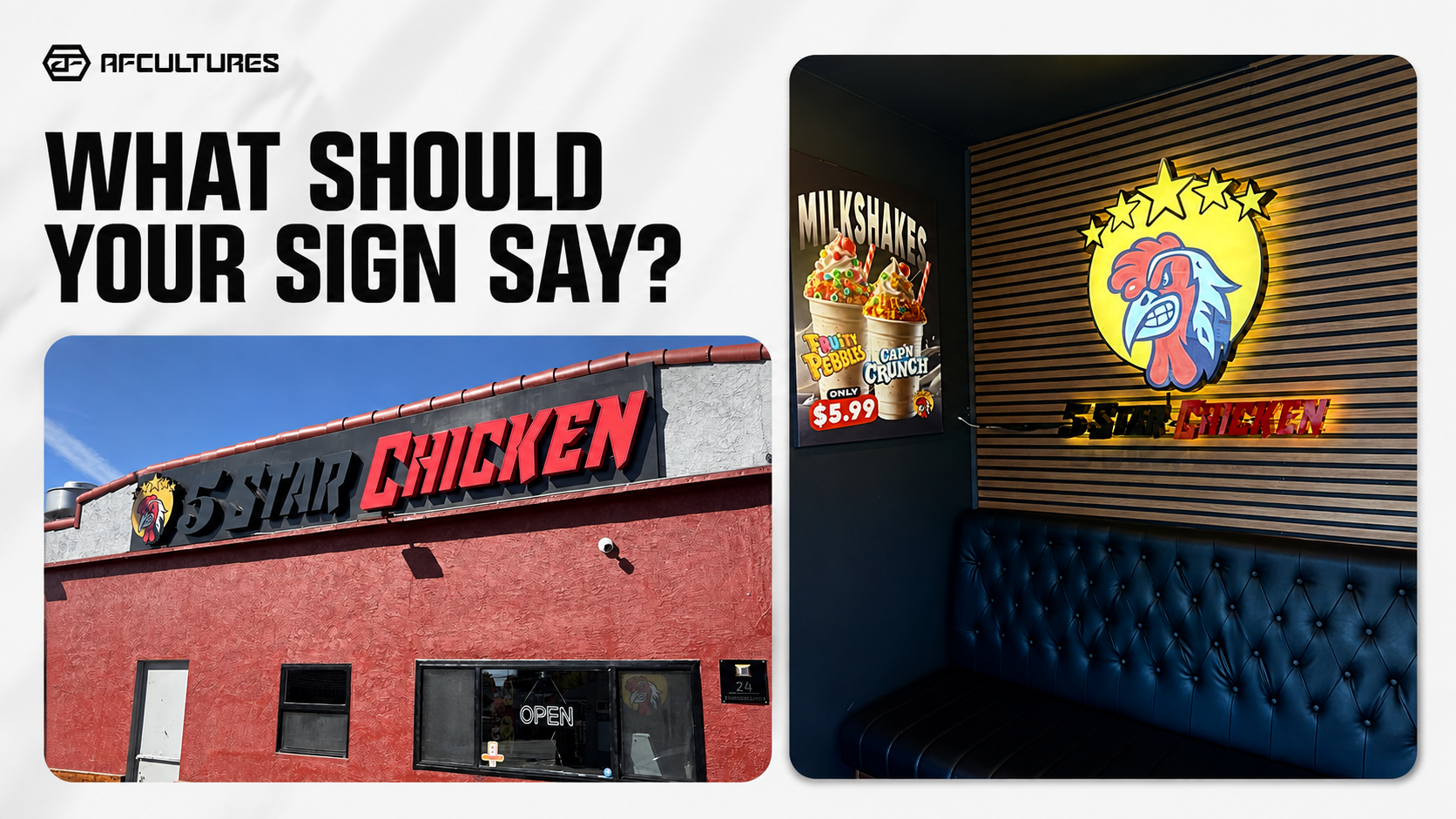
WHO SHOULD READ THIS
Business owners planning a storefront, lobby, office, studio, clinic, restaurant, or other customer-facing sign and wondering how much information it should include.
Quick Answer
For most primary business signs, keep the message simple: lead with the business name or recognizable logo.
Add a short descriptor or tagline only when it helps people understand the business quickly.
Phone numbers, websites, social handles, hours, and long service lists usually belong on supporting signs, doors, windows, or digital channels, not on the main identity sign.
A good rule is: If someone only has a few seconds, what is the one thing they must understand?
What Usually Belongs on the Main Sign?
| Information | Usually Include? |
|---|---|
| Business name or recognizable logo | Yes |
| Short business descriptor | Sometimes |
| Tagline | Only if it adds useful meaning |
| Phone number | Usually no |
| Website | Usually no |
| Social handle | Usually no |
| Full service list | No |
| Business hours | Better near the entrance |
The main sign should help people recognize the business quickly.
It does not need to carry every piece of information the business wants to communicate.
The International Sign Association notes that effective signs need to be visible, legible, and understandable in the time customers have to see them. Too many or unfamiliar words can take longer to read.
Start With the Business Name
For most primary signs, the business name or recognizable brand mark should have the strongest visual priority.
Ask:
- Can people tell which business is here?
- Can they recognize the name quickly?
- Is the main message obvious without reading several lines?
If the answer is yes, the sign is already doing its most important job.
For storefronts, this becomes even more important because customers may be approaching from a sidewalk, parking lot, or street. Our guide to storefront signage for local businesses explains how visibility and customer approach affect the sign before people reach the door.

A primary sign works best when customers can understand the brand before they have to process extra information
When Does a Tagline or Descriptor Help?
A tagline or descriptor is useful when the business name alone does not explain what the company does.
For example, a short phrase may help if:
- The brand name is abstract
- The business category is not obvious
- A clear service descriptor helps first-time customers understand the offer
But the extra line should add information, not repeat the name in different words.
If the business name already makes the category clear, another line may simply create more visual competition.
A simple test:
Remove the tagline.
Does the customer lose an important piece of information?
If not, the main sign may be stronger without it.
Where Should the Other Information Go?
Not every message belongs on the main sign.
Different information can move to the touchpoint where customers actually need it.
| Information | Better Location |
|---|---|
| Hours | Door or entrance |
| Phone number | Website, directory, or supporting graphic |
| Website | Print, digital, or secondary signage |
| Services | Menu, service board, window, or interior information |
| Directions | Separate wayfinding sign |
| Promotions | Temporary or changeable signage |
| Social handle | Supporting marketing material |
This keeps the primary sign focused while still giving customers access to the information they need later.
 Supporting touchpoints can carry hours, directions, services, or other information without overloading the main identity sign
Planning a new sign?
Decide what someone must understand first before deciding how much information to add.
Do Not Make Every Message Equally Important
One common problem is giving the same visual weight to:
- Logo
- Business name
- Tagline
- Phone
- Website
- Service list
When everything is emphasized, nothing feels primary.
Instead, create a simple hierarchy:
First
Who is this business?
Second
What does someone need to know immediately?
Later
Everything they can learn after they stop, enter, or interact with the business.
This is also why one sign does not need to solve every communication problem in the space.
Review the Message in the Real Space
A sign may look simple on a design file but feel crowded once it is placed on a wall.
Architecture changes how much information the sign can comfortably carry.
Review the sign with:
- Doors
- Windows
- Wall edges
- Furniture
- Neighboring businesses
- Customer approach
- Other signs already in the space
If you are unsure how much visual information the wall can handle, AFCULTURES' commercial signage planning approach looks at the complete environment before treating the sign as an isolated graphic.
A 3-Question Check Before Approval
Before approving the wording, ask:
1. What should someone notice first?
If the answer is unclear, simplify the hierarchy.
2. Does every line help someone understand or act?
If not, move that information elsewhere.
3. Can someone understand the main message quickly?
If not, the sign may be trying to say too much.
Frequently Asked Questions
Should a business sign include a phone number?
Usually not on the primary identity sign. A phone number can be useful on supporting signage when customers are expected to stop and read it.
Should I put my website on my storefront sign?
Only when it serves a clear purpose. For most businesses, the name or logo should remain the main message, while the website can appear on a door, window, or other supporting material.
Does every business sign need a tagline?
No. Use a tagline only when it helps explain the business or adds meaning that the main name does not already communicate.
Keep the Main Message Clear
A business sign does not need to tell customers everything.
It needs to help them understand the most important thing first.
Start with the brand name or recognizable identity, add only the information that improves immediate understanding, and move everything else to the touchpoint where customers actually need it.
Send AFCULTURES your logo and a wide photo of the space. We can help you review what the sign needs to communicate before deciding how much information belongs on the wall.


