


Storefront Signage Ideas For Local Businesses: Make Your Location Easier To Notice
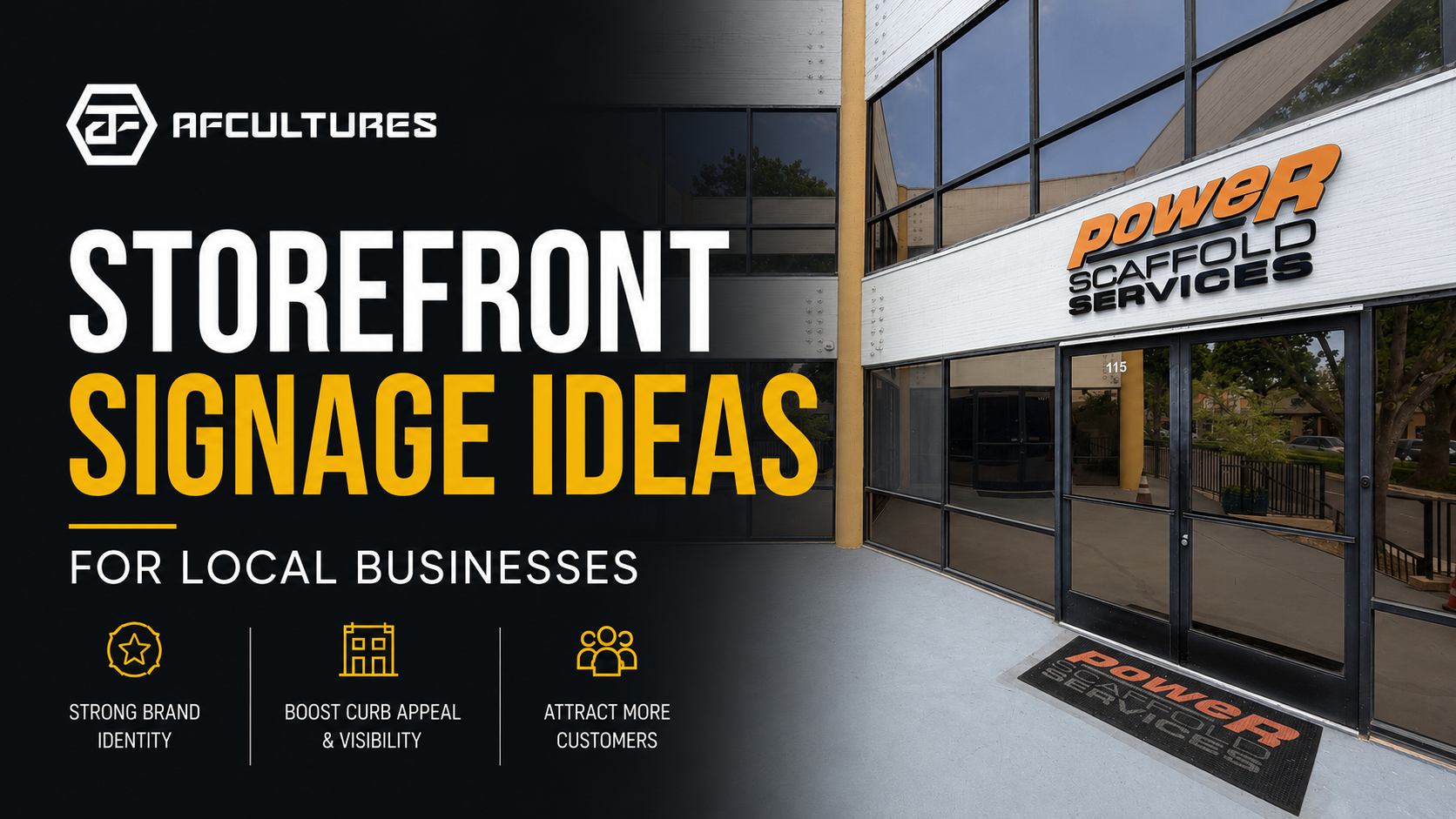
A storefront sign is often the first physical touchpoint between a business and a customer.
Before someone walks in, books an appointment, asks a question, or makes a purchase, they first need to notice the location and understand what the business is.
That is why storefront signage is not just decoration. It helps a local business become visible, recognizable, and easier to trust in the real world.
The International Sign Association notes that sign legibility, scale, information, quality, and uniqueness can all affect how well a sign performs for a business.
For local businesses, the goal is simple: Make the storefront easier to notice, easier to understand, and easier to walk into.
Quick Answer: What Makes A Good Storefront Sign?
A good storefront sign should be easy to read, visible from the right distance, and appropriate for the business space.
The best storefront signage usually considers:
- Business name readability
- Viewing distance from sidewalk, parking lot, or street
- Sign size and wall proportion
- Lighting for day and night visibility
- Material and finish
- Building shape, wall color, doors, and windows
- A realistic mockup before production
A storefront sign should not only look good in a design file. It should work on the actual building.
See What Your Sign Could Look Like In Your Space
Send us your logo and storefront photo. AFCULTURES can help you visualize the sign before production, so you can review size, placement, lighting, and overall storefront fit earlier in the process.
1. Make The Business Name Readable First
The first job of a storefront sign is clarity.
Customers should be able to recognize the business name before they are directly at the door. This matters especially when people are walking past, entering a parking lot, scanning a shopping plaza, or looking for the right location from the street.
A sign can look beautiful up close but still fail if it becomes hard to read from the real viewing distance.
To improve readability, consider:
- Strong contrast between the letters and the background
- Larger main letters
- Clean spacing
- Fewer words on the main sign
- A clear logo or wordmark
- Lighting that supports visibility without overpowering the facade
A storefront sign should help customers know where they are going without making them search for it.
2. Match The Sign Style To The Type Of Business
A good sign does more than show a logo. It sets expectations.
A salon, gym, café, restaurant, clinic, tattoo studio, and professional office should not all feel the same from the outside. The sign should match the kind of customer experience the business wants to create.
| Business Type | Storefront Sign Direction |
|---|---|
| Salon / beauty studio | Soft glow, clean dimensional letters, polished finish |
| Gym / fitness studio | Bold letters, strong contrast, high-impact lighting |
| Café / restaurant | Warm lighting, readable name, inviting storefront feel |
| Clinic / office | Clean material, balanced scale, professional finish |
| Tattoo / creative studio | More personality, custom shape, stronger visual identity |
| Retail store | Clear name, strong visibility, simple recognition |
The goal is not to copy another business. The goal is to make the storefront feel right for your category, your space, and your customers.
3. Plan For How Customers Actually Approach The Storefront

A storefront is not seen from one perfect angle.
People may see it from the sidewalk, the parking lot, across the street, inside a moving car, or while walking through a commercial plaza.
Before choosing a sign direction, ask:
- Where do customers first see the business?
- Is the sign visible from the parking lot?
- Is the entrance easy to identify?
- Are trees, windows, awnings, columns, or neighboring signs blocking the view?
- Will the sign need to work during the day, at night, or both?
- Will customers view it mostly while walking or driving?
A sign that looks balanced in a straight-on mockup may still need adjustment for the way people actually approach the location.
Good storefront signage starts with the customer path, not only the wall.
Not Sure What Sign Style Fits Your Storefront?
AFCULTURES can review your logo, storefront photo, viewing distance, and lighting needs before recommending a sign direction.
4. Use Lighting To Make The Storefront Feel Active

Lighting can make a storefront feel more visible and active, especially after dark.
AFCULTURES offers signage options such as 3D LED signs, back-lit metal signs, and non-illuminated signs for indoor and outdoor use.
Different lighting styles create different effects:
| Lighting Option | Best For |
|---|---|
| Backlit / halo-lit | Softer glow, premium feel, refined storefront presence |
| Front-lit | Stronger visibility and direct brightness |
| Edge-lit | Modern and clean lighting effect |
| Non-illuminated | Simple daylight presence and material-focused branding |
Lighting should not be chosen only because it looks impressive online.
It should fit the wall, business type, viewing distance, local environment, and how the storefront looks after sunset.
A sign that is too dim may not create enough presence. A sign that is too bright may feel distracting. The right lighting supports the brand without fighting the building.
5. Use A Mockup Before Production
A storefront sign should be reviewed in context before it is built.
A realistic sign mockup helps business owners see how the sign may look on the actual facade, not only as a logo file on a blank background.
A mockup can help check:
- Size
- Placement
- Readability
- Wall balance
- Color contrast
- Lighting direction
- Relationship with doors, windows, and building lines
This step matters because a real sign is never seen in isolation. It is seen on a wall, near windows, under daylight, at night, from a distance, and beside other storefront elements.
A mockup does not replace production planning, but it reduces guessing before fabrication starts.
What To Send Before Choosing A Storefront Sign
You do not need to know the exact sign type before reaching out.
A good signage team can help you decide. But the more context you send, the better the recommendation can be.
| What To Send | Why It Matters |
|---|---|
| Logo file | Helps check shape, color, and production fit |
| Storefront photo | Shows the real wall, entrance, and background |
| Approximate wall width | Helps plan scale and proportion |
| Viewing distance | Helps check readability |
| Lighting preference | Helps decide illuminated vs. non-illuminated direction |
| City/state or project location | Helps with outdoor planning needs |
| Timeline | Helps plan mockup, production, and installation |
Common Storefront Signage Mistakes To Avoid
Before production starts, watch out for these common mistakes:
- Choosing a sign only from a close-up product photo
- Making the logo too small for the viewing distance
- Adding too much text to the main storefront sign
- Choosing lighting without checking the wall and background
- Ignoring how customers approach the location
- Skipping a realistic mockup before fabrication
Most storefront sign problems do not start in production. They start when the sign is planned without enough real-world context.
Ready To Make Your Storefront Easier To Notice?
Send your logo, storefront photo, project location, and timeline. AFCULTURES can help you choose a storefront sign direction that fits your real space before production begins.

Frequently Asked Questions
What makes a good storefront sign?
A good storefront sign is readable, visible from the right distance, well-sized for the building, appropriate for the brand, and planned around the way customers actually approach the business.
Should my storefront sign be illuminated?
Illuminated signs can help a storefront stay visible after dark and create a stronger presence. The right lighting choice depends on the wall, viewing distance, business type, local environment, and desired brand feel.
What should I send before ordering a storefront sign?
Send your logo file, storefront photo, approximate wall width, viewing distance, lighting preference, project location, and timeline. These details help the sign team recommend size, material, lighting, and placement.
Why should I use a mockup before production?
A mockup helps preview the sign on the actual storefront before fabrication. It can help check size, placement, readability, color contrast, lighting direction, and how the sign fits the building.
Related Reaing


