


What Should a Sign Shop Send a Manufacturing Partner Before Requesting a Quote?
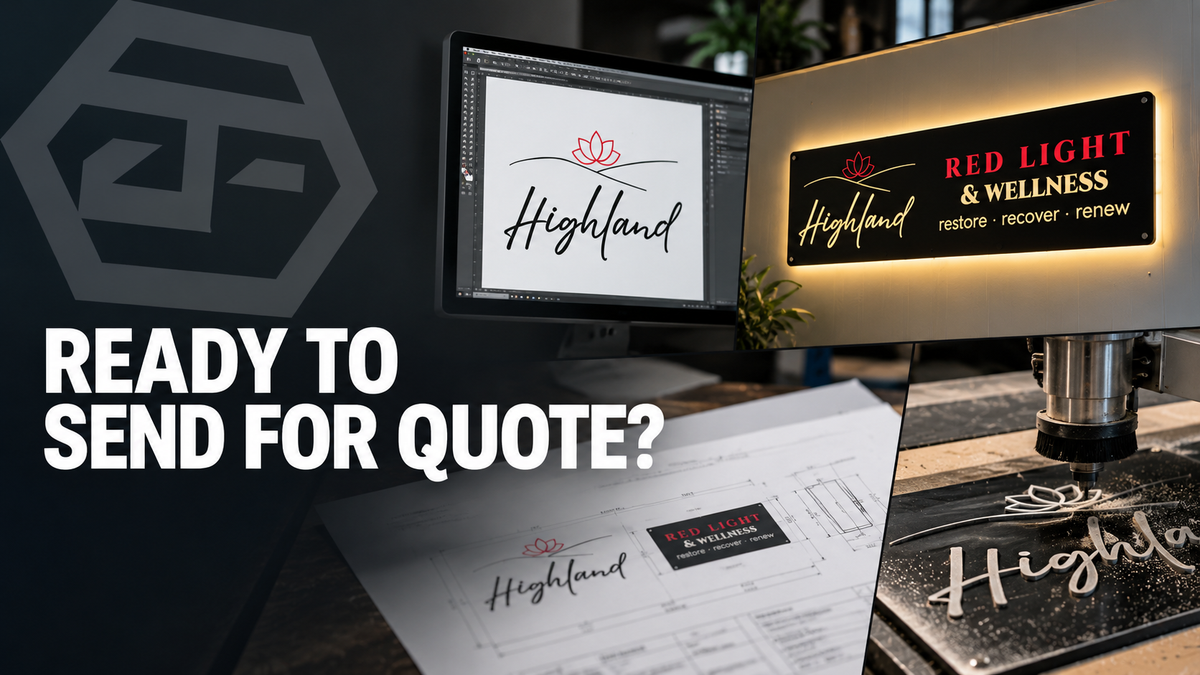
WHO SHOULD READ THIS
Sign shops, project managers, resellers, and agencies outsourcing custom sign fabrication and trying to get a clearer quote without unnecessary back-and-forth.
Quick Answer
A manufacturing partner does not need a perfect production package to start—but they do need enough information to understand what the client has approved, what cannot change, and what the project needs to achieve.
A useful first package includes:
- Current logo or artwork
- Overall size and quantity
- Intended appearance or sign direction
- Known site or project constraints
- Client non-negotiables
- Required timeline and destination
- What you need back from the manufacturer
The goal is simple: Send enough context to reduce assumptions.
What Should Be in the First Project Brief?
| Send This | Why It Matters |
|---|---|
| Current artwork | Shows the brand direction the client expects |
| Size + quantity | Defines the basic project scope |
| Intended appearance | Helps the manufacturer understand the result you are selling |
| Known constraints | Prevents recommendations that will not fit the project |
| Client must-haves | Separates fixed requirements from flexible details |
| Timeline + destination | Helps plan production and delivery |
| Requested output | Clarifies whether you need a quote, concept, drawing, or deeper review |
A recent AFCULTURES partner workflow review reinforced the same idea: the strongest starting point was not a fully finished technical package. It was a clear set of inputs about the brand, dimensions, intended appearance, project constraints, and non-negotiable requirements.

A useful first handoff explains the project clearly without requiring every production detail to be solved in advance.
1. Separate What Is Approved From What Is Still Flexible
Before sending a project out for fabrication, identify what the end client has already decided.
For example:
Fixed
- Logo
- Brand colors
- Overall dimensions
- Required visual effect
- Client-specific restrictions
Still open
- Production approach
- Some construction details
- Internal layout
- Recommendations needed to make the project practical
This distinction matters.
A manufacturing partner should not redesign the client’s brand because the production file is incomplete.
At the same time, the sign shop does not need to solve every fabrication detail before asking for support.
2. Send the Real Constraints Early
A clean artwork file may explain what the sign looks like.
It does not explain everything the project has to work around.
If known, share constraints such as:
- Maximum available space
- Indoor or outdoor location
- Installation environment
- Important site limitations
- Landlord or client criteria
- Required completion date
- Shipping destination
You do not need to create a long technical report for the first conversation.
But anything that could make a proposed direction unusable later should be shared early.
The fewer hidden constraints, the fewer rounds of re-quoting.
3. Tell the Manufacturer What You Need Back
“Please quote this” can mean very different things.
For a straightforward repeat project, you may only need pricing and lead time.
For a custom project, you may need more support:
- Production concept
- Front view
- Side view
- Additional visual explanation
- Questions that need client confirmation before production
In the partner workflow AFCULTURES reviewed, front and side views were treated as core communication tools, while more detailed visual breakdowns were reserved for projects that actually needed them.
That creates a better rule: Match the level of documentation to the complexity of the decision.
Do not over-engineer every quote.
Do not under-explain the projects that genuinely need clarity.

More complex projects may need additional views so the sign shop and end client can understand the same proposed result.
4. Make the Approval Chain Clear
When a sign shop works with a manufacturing partner, the end client is still the sign shop’s customer.
That means everyone should know: CLIENT → SIGN SHOP → MANUFACTURING PARTNER
Who approves the visual direction?
Who collects client revisions?
Who gives the final production approval?
Who should the manufacturer contact when something is unclear?
AFCULTURES' current wholesale terms follow this same structure: the wholesale customer is responsible for obtaining end-client approval before approving the proof for manufacture, and AFCULTURES' direct contractual relationship remains with the wholesale customer rather than the end client.
A clear approval chain protects both the client relationship and the production process.
A 7-Item Pre-Quote Check
Before sending the next project to a manufacturing partner, confirm:
- Latest artwork attached
- Size and quantity stated
- Intended appearance explained
- Known site constraints included
- Client must-haves identified
- Deadline and destination shared
- Requested output clearly stated
If one of those is unknown, label it as unknown.
That is better than letting the manufacturer guess.
Frequently Asked Questions
Do I need complete shop drawings before requesting a wholesale quote?
Not always. For many projects, clear artwork, dimensions, project intent, constraints, and timeline are enough to begin the conversation. More detailed documentation can follow when the project requires it.
Should a manufacturing partner communicate directly with my end client?
That depends on the partnership agreement. For wholesale work, the sign shop typically remains responsible for the end-client relationship and approvals.
When should I involve the manufacturer earlier?
Earlier involvement is useful when the project is custom, difficult to explain from one front view, or contains constraints that may affect the production direction.
Better Inputs Create Faster Decisions
A good wholesale workflow does not begin with more paperwork.
It begins with clear information.
Show what the client approved. Identify what is still flexible. Share the real constraints. Then be clear about what you need back.
Have a custom project your team wants to outsource?
Send AFCULTURES the current artwork, dimensions, quantity, project constraints, deadline, and the level of support you need. We can review the scope with your team before the project moves too far into production planning.
Keep the client relationship. Extend your production capability.


