


Where Should You Spend First on Signage When Opening a New Location?
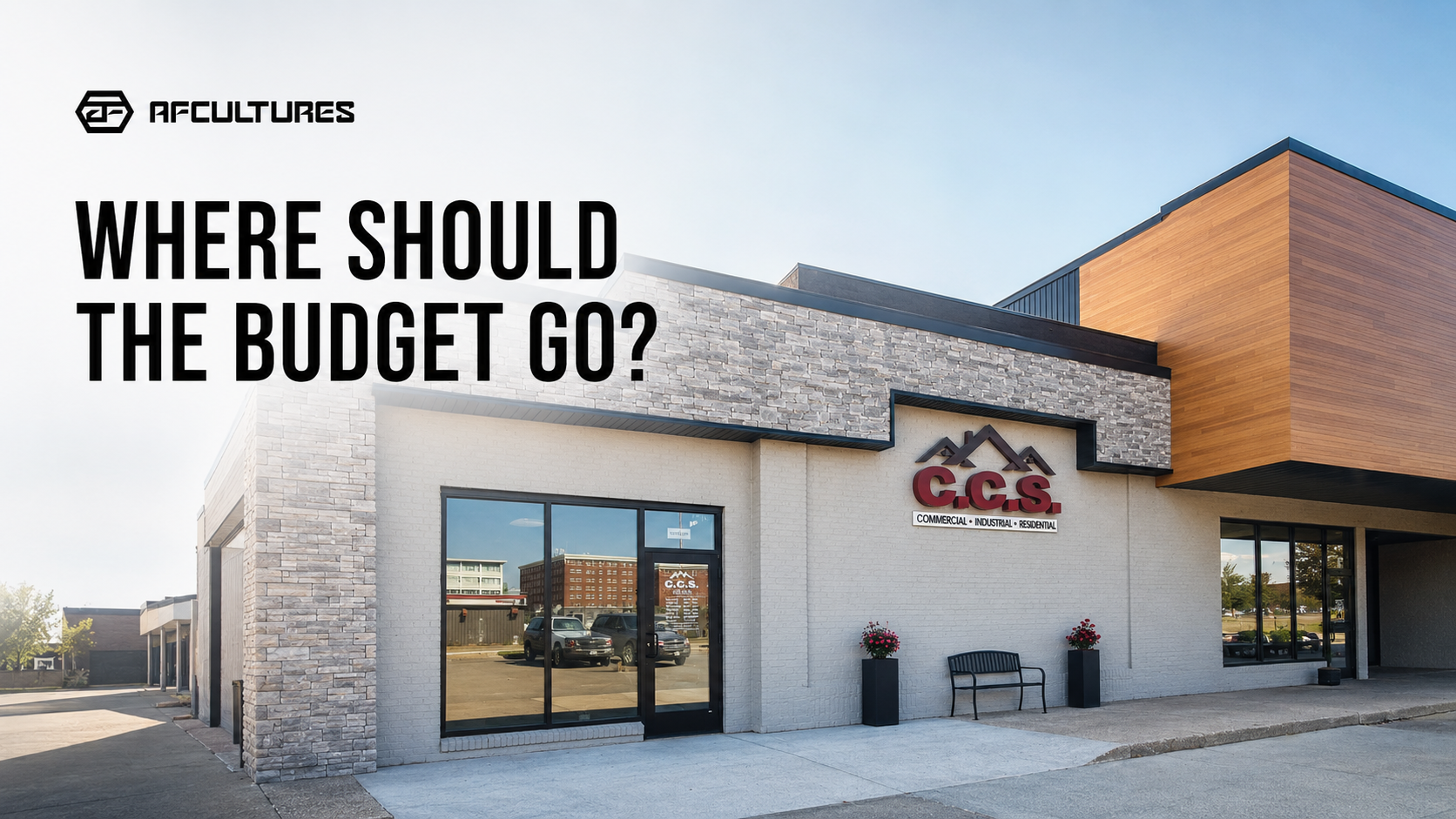
WHO SHOULD READ THIS
Business owners opening a new storefront, office, restaurant, studio, clinic, or customer-facing location and trying to decide where the signage budget should go first.
Quick Answer
Spend first on the signs that help customers find the business and confirm they have reached the right place.
Next, address the points where people may become confused inside the space.
Interior brand features and decorative signage can add value, but they should usually come after the signs that solve a clear customer problem.
A simple priority is: FIND → ENTER → MOVE → EXPERIENCE
Put the budget where signage changes one of those moments.
Where Should the Budget Go First?
| Priority | What the Sign Needs to Solve |
|---|---|
| 1. Find the business | Customers can identify the location from their normal approach |
| 2. Confirm the entrance | Customers know where to enter and that they are in the right place |
| 3. Remove confusion | People can find the important customer-facing areas |
| 4. Strengthen the brand experience | One or two interior moments make the space feel connected to the brand |
| 5. Add secondary decoration | Only after the important customer needs are covered |
This is not a rule that every business must buy five types of signs.
It is an order for deciding where the next dollar should work hardest.
If you are still estimating the overall project budget, first review what affects the cost of a custom business sign.
1. First, Make Sure People Can Find You
For most customer-facing locations, the first signage problem exists before anyone walks through the door.
Ask:
- Can a first-time customer identify the business while approaching?
- Is the business name visible from the direction people actually arrive?
- Could another tenant, entrance, or building feature create confusion?
- Would someone unfamiliar with the property know they had reached the right place?
If the answer is no, that problem deserves attention before adding decorative signage inside.
A beautiful interior brand wall cannot help a customer who never finds the entrance.

The first signage investment should address whether a new customer can identify the business and understand where to enter
2. Make the Entrance Obvious
Finding the building and finding the correct entrance are not always the same thing.
This becomes more important when a property has:
- Several doors
- Shared entrances
- Multiple tenants
- A reception area away from the entrance
- Pickup and customer entrances in different locations
The goal here is simple: Remove the moment where a customer stops and wonders, “Where do I go?”
If the location already has one obvious entrance, you may not need another major sign.
That is why signage planning should start with the actual customer path rather than a fixed list of products.
3. Spend Where Customers Get Confused
Once people are inside, do not assume every hallway or empty wall needs a sign.
Look for decision points.
Where do people:
- Stop and look around?
- Ask staff for directions?
- Miss reception or check-in?
- Choose between several areas?
- Walk in the wrong direction?
Those moments tell you where information is valuable.
The Sign Research Foundation maintains research on wayfinding, sign design, and placement, reinforcing the broader idea that signage should be considered in relation to how people move through and understand a space.
If your location has several of these moments, our guide to deciding between one sign or a signage system can help you map the full journey before adding individual pieces.
4. Then Choose the Most Important Brand Moment
After the functional problems are covered, decide where the brand should have its strongest presence inside.
That might be:
- Behind reception
- Behind a main counter
- On the first wall customers see
- In a waiting area
- At a feature wall connected to the experience
You usually do not need the logo at equal strength everywhere.
One strong brand moment can be more effective than repeating the same logo across several walls.
Ask:
If customers remember one visual moment inside this space, where should it happen?
That is the place worth considering for a stronger investment.

One strong interior brand moment can anchor the space without repeating the logo across every available wall
5. Decorative Signs Come After the Essentials
Decorative signage can add personality, atmosphere, or a photo moment.
But it should have a reason to exist.
Before adding one, ask: What gets better for the customer because this sign is here?
Possible answers:
- The space feels more connected to the brand.
- The waiting area feels less generic.
- The feature creates a memorable customer moment.
- It supports an experience people are likely to photograph or share.
If the only answer is: “We still have budget left”, that is not a strong enough reason.
What If the Budget Is Very Limited?
Use a simple test.
Protect first:
Visibility
Can customers find you?
Arrival
Can they confidently enter?
Clarity
Can they move through the important customer-facing parts of the space?
Add next:
Brand presence
Where should the business feel most memorable?
Add last:
Decoration
Which additional elements genuinely improve the experience?
A smaller signage budget does not have to mean a weaker space.
It means the decisions need a clearer order.
Opening a new location?
Before choosing individual signs, photograph the customer journey: the approach, storefront, entrance, reception, and main customer-facing areas. Those views make it easier to see where the budget should go first.
A Simple Budget Test
For every proposed sign, complete this sentence:
Without this sign, customers may ________.
If the answer is:
- miss the business;
- use the wrong entrance;
- become confused;
- miss an important destination;
the sign is solving a clear problem.
If you cannot complete the sentence, ask whether that sign should be funded before something more important.
Plan the Priorities Before the Pieces
Signage budgets are easier to control when the full space is reviewed before each wall becomes a separate project.
Start with:
- How customers approach
- Where they enter
- Where they make decisions
- Where the brand should have the strongest presence
- Which secondary elements can wait
For locations with several customer-facing areas, AFCULTURES' commercial signage planning approach looks at the space as a whole before individual sign directions are developed.
Frequently Asked Questions
What sign should a new business prioritize first?
Usually, prioritize the sign that solves the biggest arrival problem: helping customers find the business or recognize the correct entrance. The exact priority depends on how customers approach the location.
Should I spend more on exterior or interior signage?
It depends on where the biggest customer problem occurs. If customers struggle to find the location, exterior visibility comes first. If arrival is already obvious, the budget may be better used at an important interior decision or brand moment.
Does every new location need several signs?
No. A simple location with a clear entrance and short customer journey may need very little signage. Add another sign only when it solves a clear information, direction, or brand need.
Should decorative signage be part of the opening budget?
It can be, but it should come after the signs that help customers find, enter, and understand the space, especially when the budget is limited.
Spend Where the Customer Needs the Sign
Do not divide the signage budget equally across the walls.
Prioritize the moments that affect whether customers can find, enter, move through, and remember the business.
Send AFCULTURES your logo and wide photos of the location. We can help identify which parts of the customer journey deserve the signage budget first, and which pieces can wait.


