


How Much Does A Custom Business Sign Cost? A Practical Budget Guide For Business Owners
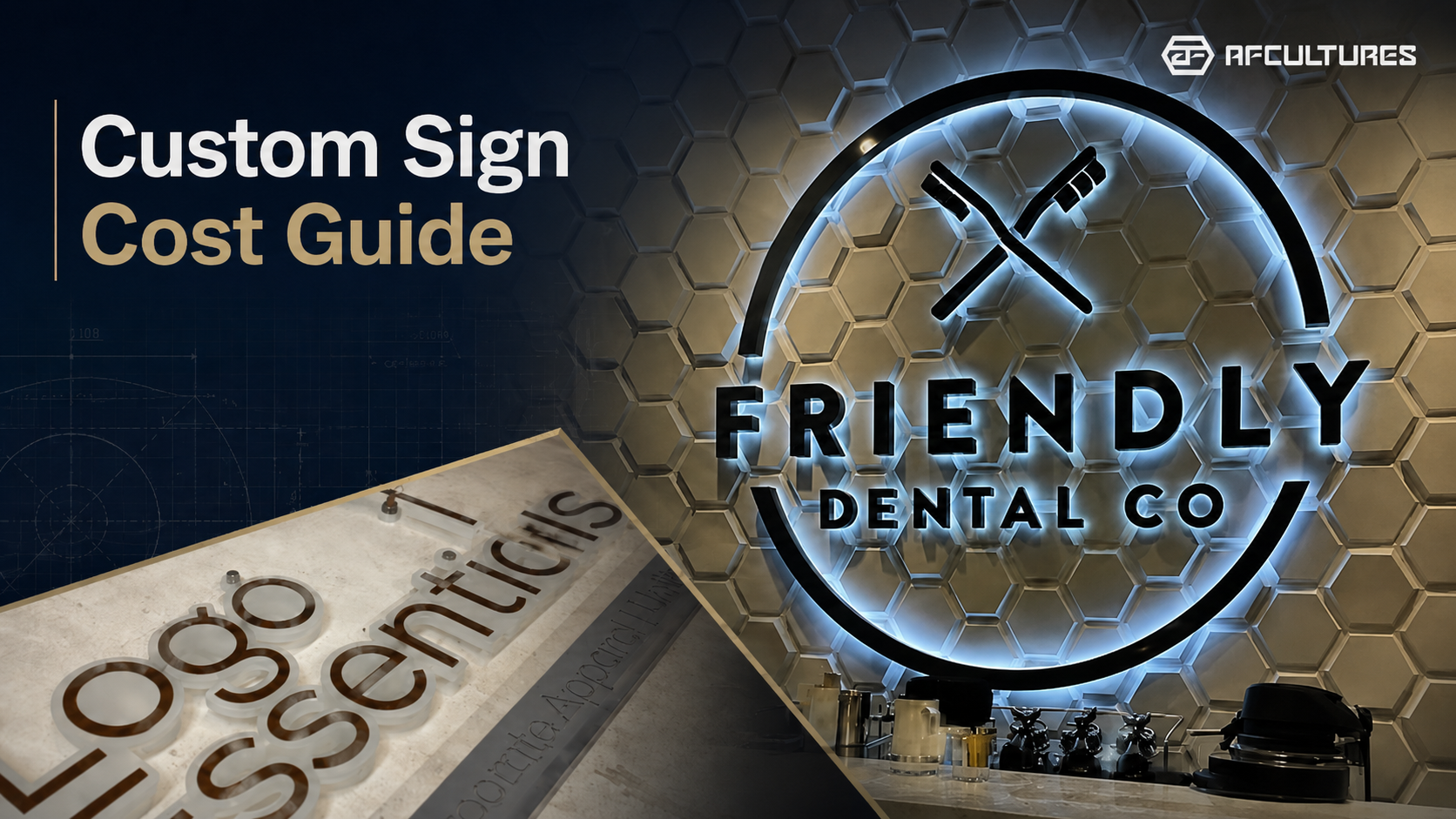
A custom business sign is not priced like a poster, a banner, or a simple printed graphic.
It is a physical brand asset built around your logo, your space, your visibility needs, your material choice, your lighting preference, and the way the sign will be installed. Industry guidance from the International Sign Association points to sign legibility, viewing enjoyment, information, quality, appropriate scale, and uniqueness as factors that can affect how well a sign performs for a business.
That is why two signs with the same logo can have completely different costs.
One may be a clean indoor lobby sign with simple mounting. Another may be a larger illuminated storefront sign that requires weather-resistant materials, electrical planning, professional installation, and permit considerations.
So instead of asking, “How much does a custom sign cost?” the better question is:
What decisions affect the final cost of a custom business sign?
This guide breaks down the main factors business owners should understand before requesting a quote.
Quick Answer: What Affects The Cost Of A Custom Business Sign?
The cost of a custom business sign usually depends on:
- Sign type
- Size
- Material
- Lighting
- Indoor or outdoor use
- Design complexity
- Installation method
- Timeline
- Shipping, logistics, or permit requirements
A serious quote should not only tell you a price. It should explain what is included, what is not included, and which decisions affect the final result.
Want A Clearer Sign Quote?
Send your logo, wall or storefront photo, project location, and preferred timeline. AFCULTURES can help review what affects your sign budget before production starts.
At AFCULTURES, the goal is not to push business owners toward the most expensive option. The goal is to help you choose the sign that fits your brand, your space, and your real business needs.

What affects custom business sign cost?
Why One Logo Can Lead To Two Very Different Sign Quotes
A logo is only the starting point.
Once that logo becomes a physical sign, many new decisions appear:
- How large should it be on the wall?
- Should it be lit or non-illuminated?
- Should the sign feel bold, refined, minimal, warm, or architectural?
- Will it be installed indoors or outdoors?
- Will customers see it from five feet away or across the street?
- Does the wall need special mounting?
- Does the project need professional installation or permit review?
This is why a flat logo file is not enough to define the cost.
The same logo can become a small non-illuminated office sign, a premium backlit lobby sign, a storefront sign, or a full commercial signage project. Each version carries a different level of material, production, lighting, labor, and planning.
A good sign quote starts by understanding the space, not just the artwork.
1. Sign Type
The type of sign you choose is one of the biggest cost drivers.
A simple dimensional logo sign will not be priced the same as a backlit metal sign, front-lit sign, storefront sign, monument sign, or full commercial signage package.
Different sign types require different production methods, materials, lighting systems, mounting structures, and installation planning.
For example:
- A non-illuminated sign may focus more on material, shape, and finish.
- A backlit sign requires lighting, spacing, wiring, and light control.
- A storefront sign may involve visibility, weather resistance, building rules, and installation access.
- A commercial signage project may include multiple signs across different areas of the business.
Before choosing a sign type, business owners should ask:
What job does this sign need to do?
Does it need to attract attention from the street? Build trust in a lobby? Create a photo-worthy wall? Make a new location feel established? Support wayfinding? Upgrade a professional space?
The answer affects both the design direction and the budget.
2. Size And Viewing Distance
Size matters because it affects material usage, production time, shipping, handling, and installation.
But bigger is not always better.
A sign should be sized for the way people will actually see it. The Sign Research Foundation notes that viewing distance, size, and location are important factors when deciding sign placement.
An indoor reception sign may only need to be viewed from a few feet away. A storefront sign may need to be readable from across a parking lot or street. A sign for a gym, restaurant, salon, or office lobby may need a different scale depending on the wall, ceiling height, furniture, lighting, and customer path.
The right size is not just about filling space. It is about visibility, proportion, and balance.
Before requesting a quote, prepare:
- A clear wall or storefront photo
- The approximate wall width
- The preferred sign location
- The viewing distance
- Any furniture, windows, doors, or lighting around the sign area
These details help avoid overbuilding or underbuilding the sign.
3. Material And Finish
Material affects the look, durability, weight, and cost of a custom sign.
Common material decisions include:
- Metal
- Acrylic
- PVC
- Wood accents
- Painted finishes
- Powder-coated finishes
- Brushed or polished finishes
- Printed logo colors
- Textured or smooth surfaces
A material should not be chosen only because it looks good in a product photo. It should match the brand category, location, and expected customer experience.
For example, a professional office may need a more refined and permanent look. A fitness brand may need something bolder and higher contrast. A boutique or salon may need a softer, warmer, more photo-friendly presence.
Material also affects long-term performance. Outdoor signs may require stronger weather-resistant materials and finishes than indoor signs. Illuminated signs may need materials that work well with light diffusion and spacing.
The better question is not, “What material is cheapest?”
The better question is: Which material supports the way my business needs to be seen?

4. Lighting
Lighting can change both the visual impact and the price of a sign.
A non-illuminated sign is usually simpler because it does not require LED planning, power considerations, wiring, or light testing.
An illuminated sign may involve:
- LED modules
- Power supply
- Wiring
- Light diffusion
- Spacing from the wall
- Color temperature
- Brightness control
- Indoor or outdoor electrical considerations. For electric signs in the U.S., UL 48 and NEC Article 600 may also become relevant depending on the product, installation, and local requirements.
Backlit signs, front-lit signs, and edge-lit signs each create a different type of presence.
A backlit sign can create a controlled halo effect behind the logo or letters. A front-lit sign projects light through the face of the letters for stronger visibility. An edge-lit sign can feel more modern and architectural.
Lighting is not only about brightness. It is about mood, readability, and brand perception.
The International Sign Association identifies size, sign angle, location, luminance, and contrast as important factors in sign visibility.
A sign that is too dim may not create enough presence. A sign that is too bright may feel distracting, harsh, or out of place.
That is why lighting should be planned based on the business type, wall surface, room lighting, viewing distance, and customer experience.
5. Indoor Vs. Outdoor Use
Indoor and outdoor signs are built for different conditions.
An indoor sign usually focuses on interior aesthetics, wall fit, brand presentation, and clean installation.
An outdoor sign must also consider:
- Weather exposure
- Sunlight
- Wind
- Moisture
- Building surface
- Street visibility
- Local rules
- Landlord or property manager approval
- Installation access
Outdoor signs often require more planning because the sign must perform in a more demanding environment. Permit requirements can also vary by community. The International Sign Association notes that in many communities, installing a new sign requires a permit.
For business owners, this means the project location matters.
A quote for an outdoor sign should consider where the sign will be installed, how it will be mounted, what conditions it will face, and whether any permit or property requirements may affect the project.
6. Installation And Mounting
Installation can be simple or complex depending on the wall, sign size, lighting, height, and access.
Some signs may come with mounting instructions and templates for easier installation. Other projects may require professional installation, special tools, electrical work, lifts, or coordination with a property manager.
Installation cost may be affected by:
- Wall material
- Mounting method
- Sign weight
- Wiring access
- Ceiling height
- Indoor or outdoor location
- Required equipment
- Distance and travel
- Business operating hours
- Site restrictions
This is why it is important to clarify whether installation is included in the quote or handled separately.
A lower quote may not always be cheaper if it leaves out mounting details, wiring planning, equipment, or site requirements.
A serious sign partner should help you understand what installation will actually involve before production starts.
7. Design Complexity
A clean logo can still become a complex sign.
Design complexity may come from:
- Thin strokes
- Small letters
- Intricate shapes
- Multiple logo colors
- Layered elements
- Special finishes
- Lighting effects
- Custom mounting
- Non-standard dimensions
Not every digital logo is automatically production-ready.
A sign-ready design must consider material thickness, readability, spacing, lighting, and installation. Some logo details may need to be adjusted so the final sign looks clean, durable, and accurate in the real world.
That does not mean changing your brand. It means translating your brand into a physical object that can be built properly.
This is where mockups and revisions become important.
A high-quality mockup helps you understand how the sign will look in context before production begins.
8. Timeline, Shipping, And Project Scope
Timeline can also affect cost.
A standard project gives the team more time to plan, produce, check quality, package, ship, and coordinate installation. A rush project may require faster sourcing, overtime production, expedited logistics, or priority scheduling.
Shipping can also vary depending on:
- Sign size
- Sign weight
- Fragility
- Packaging method
- Destination
- Freight requirements
- Insurance
- Timeline
For larger commercial projects, the scope may include more than one sign, multiple rooms, exterior and interior signs, installation planning, or permit-related coordination.
This is why business owners should be clear about timing from the beginning.
If your opening date, renovation schedule, launch event, or grand opening depends on the sign, share that timeline early.

What Should Be Included In A Serious Sign Quote?
A useful quote should help you understand the project, not just the number.
Here is what business owners should look for:
| Quote Detail | Why It Matters |
|---|---|
| Sign type | Helps you compare the correct solution, not just the price |
| Size | Affects material, visibility, production, shipping, and installation |
| Material | Impacts appearance, durability, weight, and long-term performance |
| Lighting | Affects visual presence, power planning, and production complexity |
| Finish | Determines how premium, bold, warm, or refined the sign feels |
| Mockup or preview | Helps you see the sign before production |
| Installation details | Clarifies whether mounting, wiring, tools, or equipment are included |
| Timeline | Helps you plan around opening, renovation, or launch dates |
| Shipping or logistics | Prevents surprise costs near the end of the project |
| Permit or site considerations | Important for outdoor and commercial locations |
A serious quote should make the scope clear enough that you can make a confident decision.
Why The Cheapest Quote May Not Be The Best Quote
It is natural to compare prices.
But the cheapest quote may not always be the lowest-risk option.
A low quote can become expensive later if it leaves out important details like:
- Material quality
- Lighting consistency
- Installation support
- Wiring planning
- Shipping protection
- Revisions
- Permit considerations
- Warranty
- Long-term durability
The problem is not choosing a more affordable sign. The problem is choosing a quote that does not explain what you are actually getting.
A strong business sign should not only look good on day one. It should continue representing the business well over time.
That is why price should be compared together with scope, build quality, communication, and accountability.
How To Prepare Before Requesting A Custom Sign Quote
To get a more accurate quote, prepare these details before contacting a sign company:
- Your logo file
- A photo of the wall, storefront, or installation area
- Your preferred sign size or approximate wall width
- Indoor or outdoor location
- Lighting preference, if any
- Business type and brand style
- Project city, state, or zip code
- Desired timeline
- Any landlord, building, or property requirements
- Whether you need installation support
You do not need to know every technical detail before reaching out.
A good sign team can help you decide. But the more context you provide, the more useful the quote will be.
How AFCULTURES Helps Business Owners Budget With Clarity
AFCULTURES starts by reviewing the business goal, logo, wall or storefront photo, project location, and timeline.
From there, the team can help clarify which cost factors may affect the project, including size, material, lighting, mounting, installation, shipping, and permit considerations.
The goal is to help business owners understand the scope before production starts.
No unclear quote. No guessing from a logo file alone. No sign direction that looks good online but does not fit the real space.
Final Thought: A Better Quote Starts With Better Context
The cost of a custom business sign depends on more than the logo.
It depends on what the sign needs to do, where it will be installed, how it should look, how it should be lit, how it should be mounted, and how long it needs to perform.
So before comparing prices, compare clarity.
A better quote should help you understand the full project, not just the starting number.
If you are planning a custom sign for your office, storefront, studio, salon, restaurant, gym, clinic, or retail space, start with the basics:
→ Send your logo, wall photo, project location, and preferred timeline.
AFCULTURES will help you understand what affects your sign budget and what direction makes the most sense for your space.

Frequently Asked Questions
How much does a custom business sign cost?
The cost depends on the sign type, size, material, lighting, installation method, location, and timeline. A simple indoor sign will usually have a different budget than a larger illuminated storefront sign or commercial signage project.
Why can’t a sign com![]() pany give one fixed price immediately?
pany give one fixed price immediately?
A custom sign is built around the logo, space, material, lighting, size, mounting, and project requirements. Without those details, a fixed price may be misleading or incomplete.
Are LED business signs more expensive than non-illuminated signs?
In many cases, illuminated signs involve more components and planning than non-illuminated signs. LED modules, wiring, power supply, spacing, lighting tests, and electrical requirements can all affect the final quote.
What affects storefront sign cost the most?
Storefront sign cost is often affected by size, visibility needs, material, lighting, installation height, building surface, local rules, and landlord or property requirements.
Do I need professional installation for my business sign?
It depends on the sign type, size, weight, wall condition, height, lighting, and local requirements. Smaller indoor signs may be simpler to install, while larger, heavier, outdoor, or illuminated signs may require professional installation or electrical coordination.
What should I send to get a custom sign quote?
Send your logo file, wall or storefront photo, preferred sign location, approximate size, indoor or outdoor use, project city/state or zip code, and desired timeline. These details help the sign team recommend the right direction and provide a clearer quote.


