

Auto Repair Shop Signage: Can Customers Tell Where to Go Before They Park?
WHO SHOULD READ THIS
Owners and operators of established auto repair shops, body shops, collision centers, automotive service businesses, and multi-location repair brands planning a new facility, renovation, relocation, or signage update.
Quick Answer
Good auto repair shop signage should help customers answer four questions before they hand over the keys: Did I find the right business? Where should I park? Which entrance should I use? Does this place feel professional and trustworthy?
A useful planning sequence is: FIND → CONFIRM → ENTER → TRUST
The main sign establishes the business.
Supporting signs remove uncertainty around parking, drop-off, service bays, and customer entry.
Then the customer-facing interior reinforces the quality of the brand they chose.
An Auto Shop Has a Different Arrival Problem
A customer arriving at a restaurant or office usually looks for one obvious front door.
An automotive service facility can be more complicated.
There may be several service bays.
Cars may be moving around the property.
Technicians may use one entrance while customers use another.
There may be a drop-off area, parking spaces, reception office, waiting room, or separate parts and service areas.
If all of those functions compete visually, a first-time customer can find the business and still not know what to do next.
That is why the signage plan should begin with the arrival experience rather than with a list of signs to manufacture.
1. FIND: Make the Business Recognizable Before the Decision Point
The first job is identification.
A customer approaching the property should be able to connect the physical facility with the business they searched for, called, or booked online.
Review the primary identity from the customer's normal approach rather than only from directly in front of the building.
Look at:
- Street or parking-lot approach
- Distance from the main sign
- Neighboring businesses and visual competition
- Building orientation
- Where drivers need to make a turn or parking decision
The International Sign Association's guidance on sign design and placement also emphasizes that a sign needs to be considered in relation to its viewing environment.
If customers have only a short window to notice the business, visibility should be reviewed before simply adding more information to the sign.
It may also help to review how sign size relates to actual viewing conditions.
Can a first-time customer recognize your shop before they need to turn in?
Send AFCULTURES your logo, a wide exterior photo, and the normal customer approach. We can help review the primary identity in the context of the actual property.

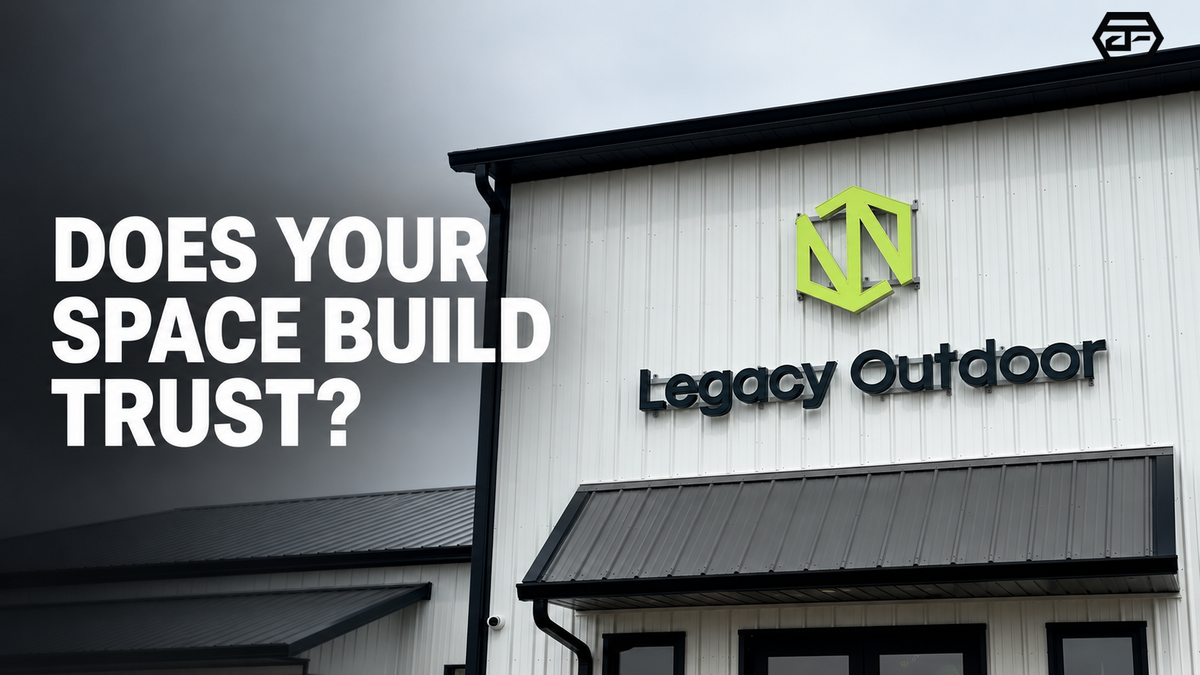
Customers need to recognize the business before they reach the point where they must decide where to turn, park, or enter
2. CONFIRM: Finding the Property Is Not the Same as Knowing Where to Go
Once customers reach the property, the questions become more specific.
They may need to know:
- Where customer parking begins
- Whether to pull toward a service bay or park first
- Where vehicle drop-off happens
- Which door leads to reception
- Whether a particular area is for employees or customers
The main brand sign should not carry all of that information.
Instead, give each message a job.
A useful hierarchy is: IDENTIFY → CONFIRM → DIRECT → INFORM
The main sign identifies the company.
A secondary sign can confirm the customer entrance.
Directional signage can guide the next move.
Operational information can appear where customers actually need it.
This is exactly why a more complex facility may need a signage system rather than one sign trying to do everything.
3. ENTER: Make the Customer Entrance Different From the Work Zone
In an active repair facility, the most visually obvious opening may not be the correct customer entrance.
Large garage doors naturally attract attention.
But customers may actually need to enter through a smaller office or reception door.
If that distinction is unclear, the signage has not finished its job.
Ask:
- Is the customer entrance obvious from the parking area?
- Does the entrance look different from service-only areas?
- Can a first-time visitor reach reception without asking a technician?
- Are instructions placed before the point of confusion?
The purpose is not to cover the property in arrows.
It is to remove uncertainty at the few moments where customers genuinely need guidance.
That also means not every piece of information belongs on the primary business sign.

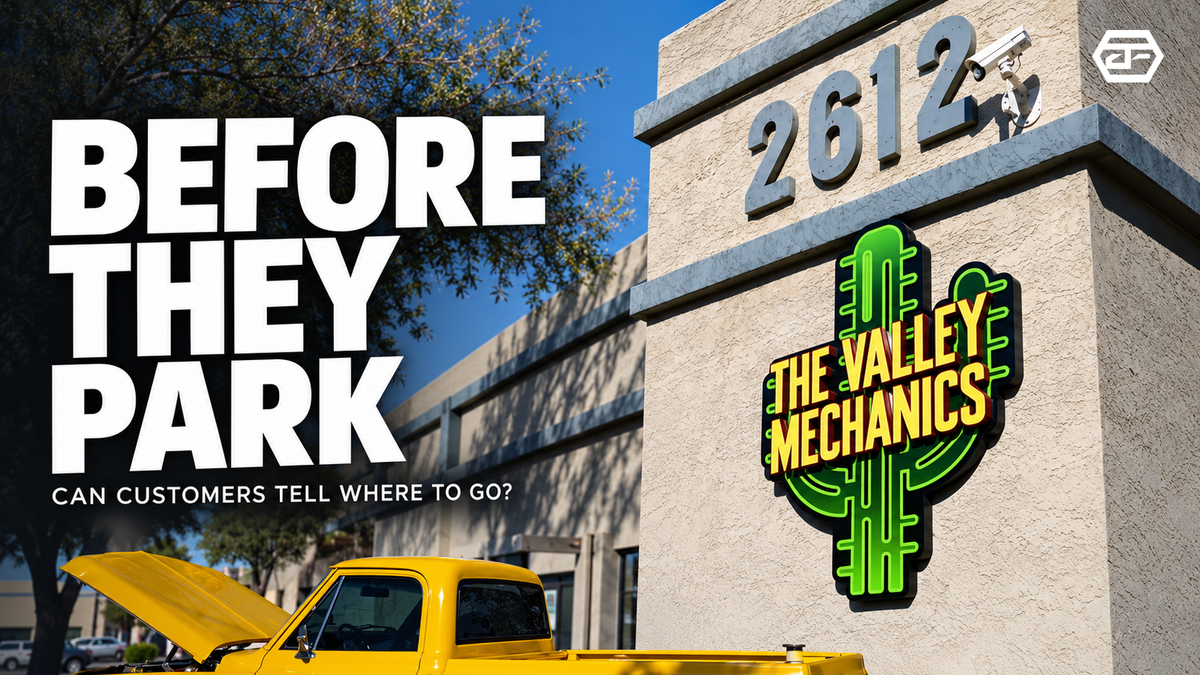
In a working automotive facility, the most visually obvious opening may not be the door customers are supposed to use
4. TRUST: Let the Customer-Facing Space Match the Quality of the Work
Once customers enter, signage takes on another role.
The exterior helped them find the shop.
The interior can help reinforce that they chose a professional business.
This does not require logos on every wall.
One clear brand anchor at reception, the customer counter, waiting area, or another high-value touchpoint may be enough.
AFCULTURES' PJM Auto Repair project is one example of automotive branding being carried into a customer-facing physical environment rather than stopping at the exterior identity.
The key question is:
Does the space customers see support the level of confidence the business wants to create?
An established automotive business may already invest heavily in equipment, technicians, digital marketing, vehicles, and customer service.
The customer-facing environment should not feel disconnected from that level of operation.
Planning signage across a larger automotive facility?
Send AFCULTURES wide photos of the exterior, parking area, customer entrance, service bays, and reception. We can help separate the primary brand moments from the directional and operational signage the property actually needs.

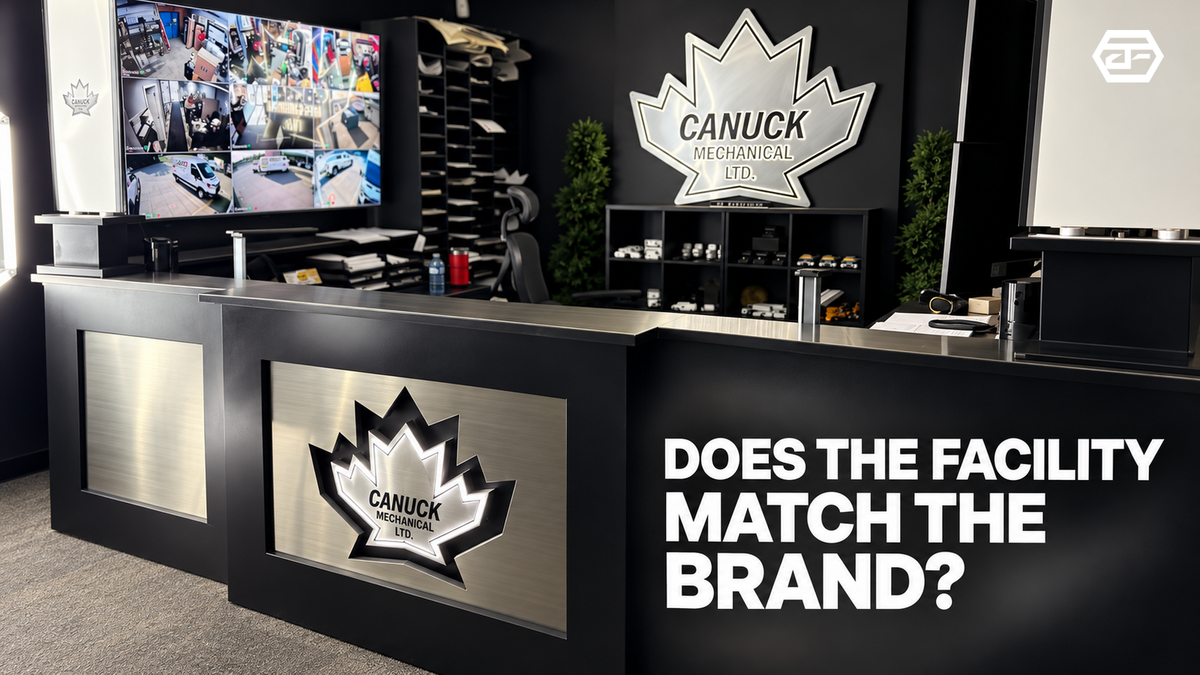
Customer-facing automotive signage can reinforce the brand after the exterior and arrival signs have already done their job
What Should Each Sign Actually Do?
| Touchpoint | Primary Job |
|---|---|
| Main exterior identity | Help customers find and recognize the business |
| Property or parking sign | Confirm where customers should go next |
| Customer entrance sign | Separate reception from service-only areas |
| Directional signage | Guide drivers or pedestrians through the facility |
| Reception brand sign | Reinforce professionalism and brand identity |
The system becomes easier to plan when every sign has one clear primary job.
A 5-Question Auto Shop Arrival Check
Walk through the property as if you were visiting for the first time and ask:
- Can I identify the business before I need to turn or park?
- Do I know where customer parking or drop-off begins?
- Is the customer entrance different from the service bays?
- Can I reach reception without stopping to ask where to go?
- Does the customer-facing space feel consistent with the quality of the business?
If one of those moments is unclear, that is where another signage decision may actually create value.
Frequently Asked Questions
What signs does an auto repair shop need?
There is no universal sign list. Start with the customer journey: primary business identification, customer entrance confirmation, and any parking, drop-off, or directional information required by the actual property.
Should service bays have the same branding as the main sign?
Not necessarily. The main identity should usually carry the strongest brand presence. Service-bay, directional, and operational signs can have simpler roles while still feeling connected to the overall brand.
Where should an auto shop place its strongest interior branding?
Usually at a customer-facing moment such as reception, the service counter, or waiting area. The best location depends on what customers actually see and experience after entering.
Make Arrival Feel as Professional as the Service
A customer begins judging the experience before anyone touches the vehicle.
They find the property.
They decide where to park.
They look for the right entrance.
Then they walk into the business.
Good automotive signage makes those moments feel obvious, connected, and professional—without turning every surface into another sign.
Opening, renovating, or updating an automotive service facility?
Send AFCULTURES your logo, exterior and interior photos, customer approach, key entrances, and project timeline. We can help turn the customer arrival into a clearer signage plan before individual pieces move into production.