


Do You Need A Permit For An Outdoor Business Sign? | AFCULTURES
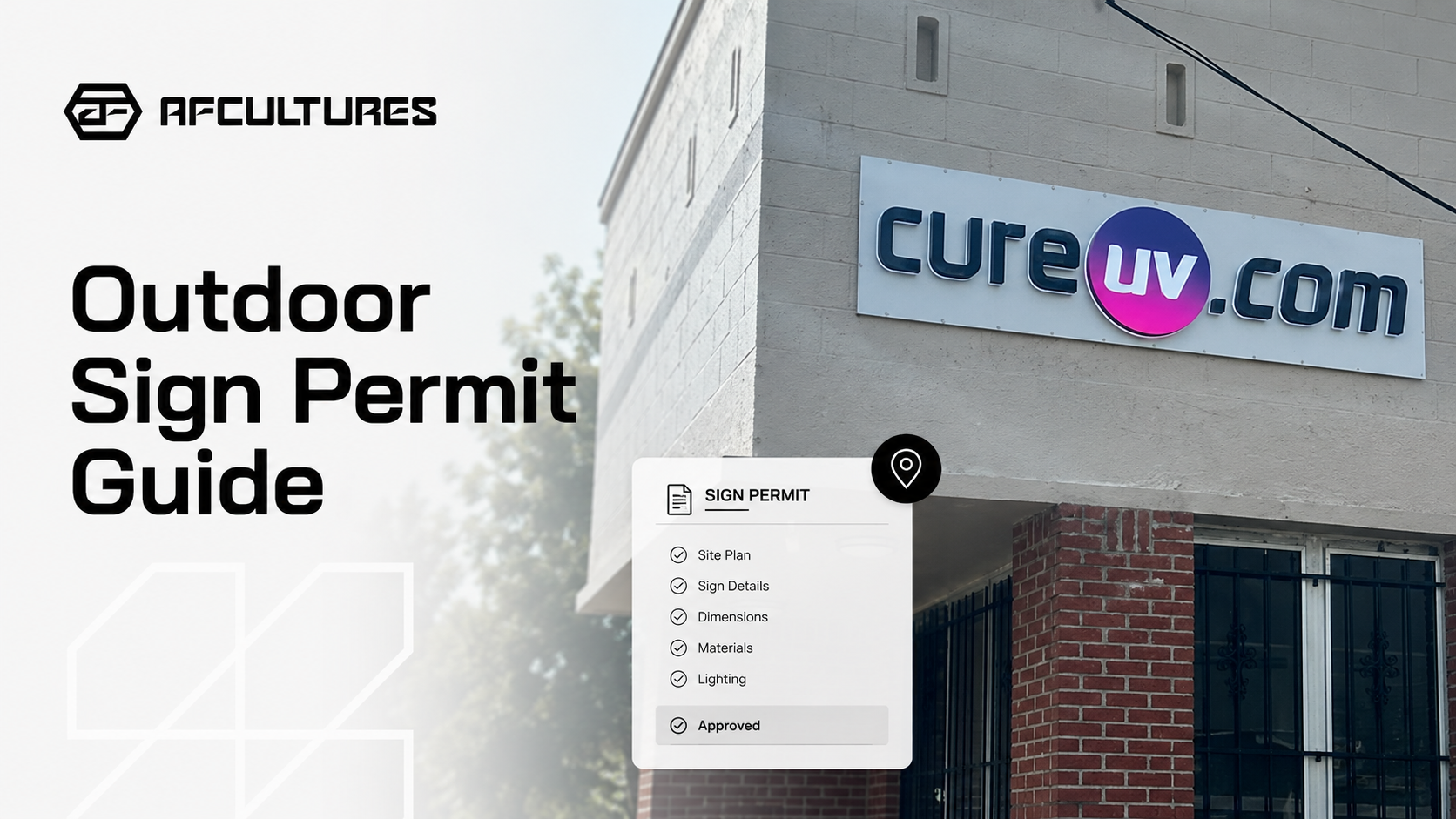
Do You Need A Permit For An Outdoor Business Sign? What Owners Should Check Before Production
Outdoor business signs are not only design projects.
They are also location projects.
Before a storefront sign, building sign, or illuminated outdoor sign goes into production, business owners may need to consider city rules, landlord approval, property guidelines, mounting conditions, lighting restrictions, and installation access.
That does not mean every project is complicated. But it does mean one thing:
The earlier you check the project location, the easier it is to avoid delays.
This guide explains what business owners should review before producing an outdoor business sign.
This article is for general planning only. Permit requirements vary by city, property, landlord, and sign type. Always check with your local authority, property manager, or signage professional before installation.
Quick Answer: Do Outdoor Business Signs Need Permits?
In many cases, outdoor business signs may require approval before installation.
That approval may come from:
- The city or local municipality
- The building owner
- The landlord or property manager
- A shopping plaza or commercial property group
- A zoning or planning department
- A sign permit office
- A building or safety department
The exact requirement depends on where the sign will be installed, what type of sign it is, how large it is, whether it is illuminated, and how it will be mounted.
That is why business owners should not wait until production is finished to ask about permits or approvals.
The safest approach is to check before production begins.
Why Permits Matter For Outdoor Signs
A permit is not just paperwork.
For outdoor signage, permits and approvals exist because signs can affect public visibility, building appearance, safety, lighting, traffic view, and the overall look of a commercial area.
For business owners, the main risk is not only a rejected permit.
The bigger risk is producing a sign that cannot be installed as planned.
That can lead to:
- Project delays
- Extra revision costs
- Installation rescheduling
- Additional drawings or documentation
- Landlord objections
- City review issues
- Unexpected equipment or access costs
- A sign that must be resized, relocated, or redesigned
A good outdoor sign project should begin with both the brand and the location in mind.

When You May Need Approval For A Business Sign
Permit and approval rules vary, but business owners should be especially careful with these outdoor sign situations:
Storefront Signs
Storefront signs are highly visible and often controlled by city rules, property rules, or landlord guidelines.
If your sign faces the street, parking lot, sidewalk, or public area, it may need review before installation.
Illuminated Signs
LED, backlit, front-lit, and other illuminated signs may need additional review because they involve brightness, electrical planning, wiring, and nighttime visibility.
Some properties also have rules about color, brightness, operating hours, or light spill.
Building-Mounted Signs
A sign installed on a building wall may need approval because it attaches to the structure.
The city, landlord, or property manager may want to review size, placement, mounting method, and materials.
Signs In Shopping Plazas
Shopping centers and commercial plazas often have their own sign criteria.
Even if the city allows a certain type of sign, the property owner may still have separate rules for logo size, color, lighting, and placement.
Freestanding Or Monument Signs
Signs that stand separately from the building may involve more site planning because they can affect landscaping, visibility, traffic flow, and property guidelines.
Large Outdoor Signs
Larger signs usually require more careful review because they affect building appearance, mounting, wind load, visibility, and installation equipment.
What Business Owners Should Check Before Production
Before approving production for an outdoor sign, prepare these details first.
1. Project Address Or ZIP Code
The project location is one of the first details a sign team should know.
Permit rules are local. A sign that works in one city may not be approved the same way in another city.
Your state, city, and ZIP code can affect:
- Permit requirements
- Shipping and logistics
- Installation planning
- Local review process
- Equipment needs
- Outdoor material recommendations
If you are still choosing between locations, share the most likely address or area as early as possible.
2. Landlord Or Property Manager Rules
If you lease your business space, do not assume the exterior sign is fully your decision.
Many landlords, shopping plazas, office buildings, and property managers have their own sign criteria.
They may control:
- Maximum sign size
- Approved sign placement
- Logo color restrictions
- Lighting type
- Mounting method
- Raceway or no-raceway rules
- Installation hours
- Required documents
- Insurance or contractor requirements
Before production, ask your landlord or property manager if there is a sign criteria document.
This one document can save a lot of time.
3. Sign Type
Different sign types may trigger different levels of review.
For example, a non-illuminated wall sign may be reviewed differently from an illuminated channel letter sign or a larger building-mounted sign.
When choosing your outdoor sign type, think beyond appearance.
Ask:
- Will it be illuminated?
- Will it be mounted directly to the wall?
- Will it need wiring?
- Will it be visible from the street?
- Will it need a raceway or backing structure?
- Will it require professional installation?
- Will the property allow this type of sign?
The right sign type should fit both the brand and the property rules.
4. Sign Size And Placement
Size and placement are two of the most important details for outdoor signage approval.
A sign may look perfect in a mockup but still need adjustment if it exceeds property or city limits.
Before production, clarify:
- Approximate sign width and height
- Wall width
- Mounting height
- Distance from doors, windows, and architectural lines
- Visibility from street or parking lot
- Any neighboring signs nearby
- Whether the sign blocks lighting, vents, cameras, or building details
A strong outdoor sign should feel intentional on the building, not forced onto the wall.
5. Lighting And Electrical Planning
Illuminated signs need more planning than non-illuminated signs.
Business owners should check:
- Where the power source is located
- Whether wiring can be hidden
- Whether brightness is restricted
- Whether the property allows illuminated signs
- Whether operating hours are limited
- Whether an electrician is needed
- Whether the sign is for indoor-visible or outdoor-facing use
Lighting can make a sign more visible and premium, but it should be planned carefully.
The goal is not only to make the sign bright.
The goal is to make it readable, clean, and appropriate for the location.
6. Wall Surface And Mounting Conditions
The wall matters.
A sign installed on stucco, brick, concrete, metal, glass, wood, or textured surfaces may require different mounting methods.
Before production, share clear photos of the wall or storefront.
Helpful photos include:
- A straight-on storefront photo
- A close-up of the wall surface
- A wider photo showing the whole building front
- Photos of nearby power access
- Photos of doors, windows, awnings, or existing signage
- A measurement reference, if available
The more the sign team understands the wall, the better they can plan production and installation.

7. Timeline And Opening Date
If your business has a grand opening, renovation deadline, lease requirement, or launch campaign, share the timeline early.
Outdoor signs may involve more steps than indoor signs.
A realistic timeline may need to include:
- Design and mockup
- Approval from the business owner
- Landlord or property review
- Permit research or submission, if applicable
- Production
- Quality check
- Shipping
- Installation scheduling
Rushing production before approvals are clear can create more risk than speed.
What To Send Before Requesting An Outdoor Sign Quote
To help a signage team understand the project, prepare:
| What To Send | Why It Helps |
|---|---|
| Logo file | Helps the team understand the design and production complexity |
| Storefront photo | Shows the real installation environment |
| Project address or ZIP code | Helps check logistics and permit considerations |
| Preferred sign location | Helps with scale, visibility, and mounting |
| Approximate wall size | Helps estimate sign size and proportion |
| Lighting preference | Helps define electrical and production needs |
| Landlord sign criteria | Helps avoid redesign after production |
| Opening date or deadline | Helps plan a realistic project timeline |
You do not need to know every technical answer before reaching out.
But you should share enough context so the sign is planned for the real site, not just the logo file.
How AFCULTURES Approaches Outdoor Sign Planning
At AFCULTURES, outdoor signage planning starts with understanding where the sign will live.
That is why project location matters.
A sign for a storefront, commercial plaza, office building, gym, salon, restaurant, or retail space should be considered in context.
The team may look at:
- The business logo
- The storefront or wall photo
- The project state and ZIP code
- The sign type
- The lighting direction
- The mounting surface
- The installation environment
- The business timeline
- Any outdoor permit or property considerations that may apply
This helps business owners avoid treating signage as a one-size-fits-all product.
A strong outdoor sign is not only made to look good.
It is made to fit the space, the building, the brand, and the approval process behind it.
Final Thought: Check The Location Before You Build The Sign
An outdoor business sign can make a location feel more established, more visible, and more trustworthy.
But before production begins, business owners should check the details that affect approval and installation.
Start with the basics:
- Where will the sign go?
- Who needs to approve it?
- What size is allowed?
- Is lighting allowed?
- What is the wall condition?
- Is there a project deadline?
- Are there city, landlord, or property rules?
The earlier you answer these questions, the smoother the project becomes.
If you are planning an outdoor sign, send your logo, storefront photo, project location, and preferred timeline.
AFCULTURES can help you understand what to check before production, so your sign is planned for the real world from the beginning.

Frequently Asked Questions
Do all outdoor business signs need permits?
Not always. Permit requirements vary by city, property, sign type, size, lighting, and mounting method. Business owners should check local rules and property requirements before production or installation.
Do storefront signs need landlord approval?
In many leased spaces, yes. Landlords, property managers, and shopping plazas may have sign criteria that control size, placement, color, lighting, and installation requirements.
Are illuminated signs harder to approve?
Illuminated signs may require more review because they involve brightness, electrical planning, nighttime visibility, and wiring. Rules depend on the city and property.
What should I send before requesting an outdoor sign quote?
Send your logo file, storefront photo, project address or ZIP code, preferred sign location, approximate wall size, lighting preference, landlord sign criteria if available, and your desired timeline.
Can I produce the sign first and check permits later?
It is better to check approval requirements before production. Producing first may create delays or redesign costs if the sign size, lighting, placement, or mounting method does not meet local or property rules.
What can delay an outdoor sign project?
Common delays include missing landlord approval, unclear wall measurements, permit review, electrical planning, installation access issues, incorrect sign size, and last-minute design changes.


