


News
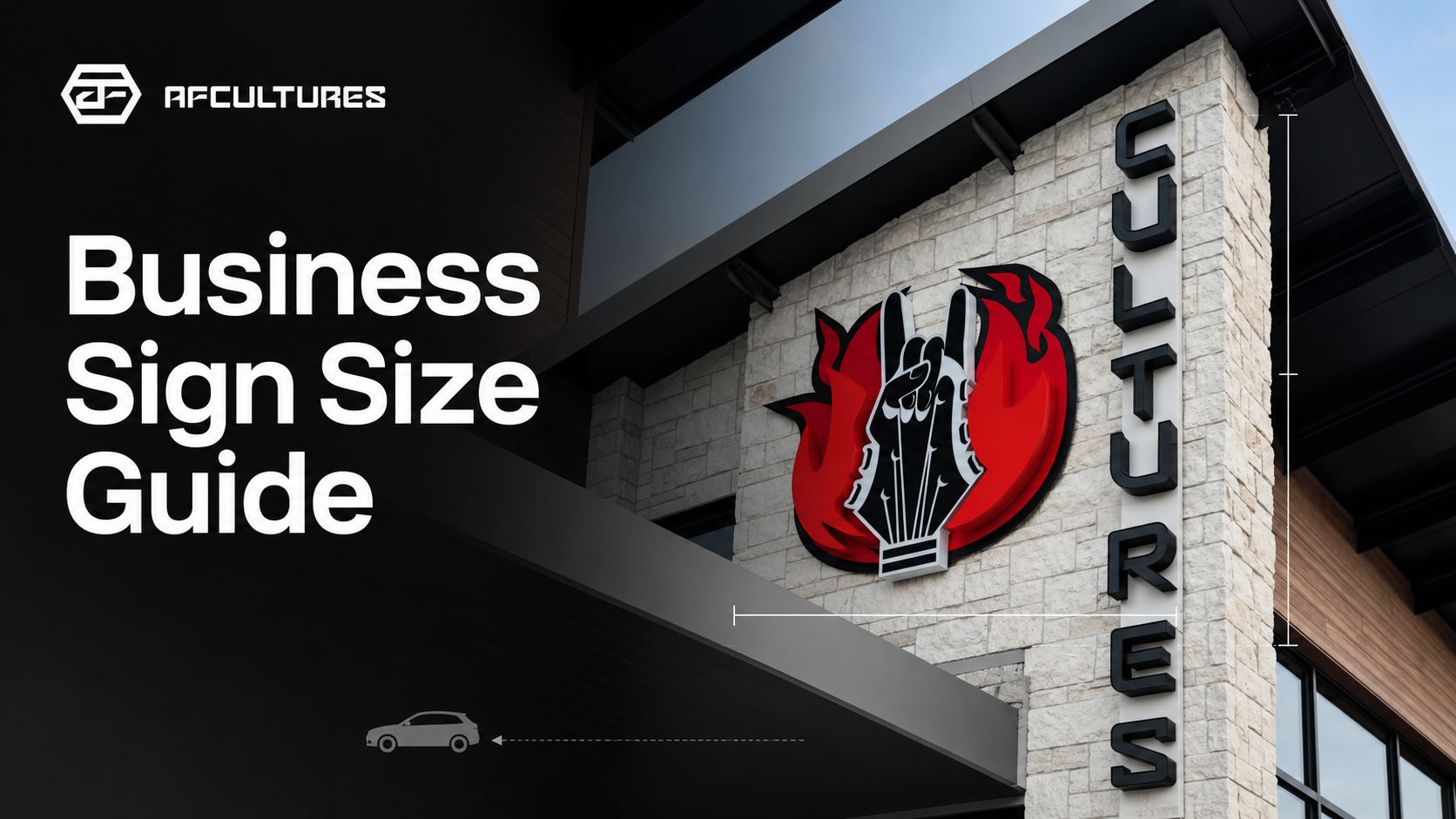
How Big Should Your Business Sign Be? A Simple Readability Guide For Owners
Choosing the right business sign size starts with viewing distance, not just wall space. Learn how letter height, placement, lighting, and mockups help business owners avoid signs that look too small, too large, or hard to read.
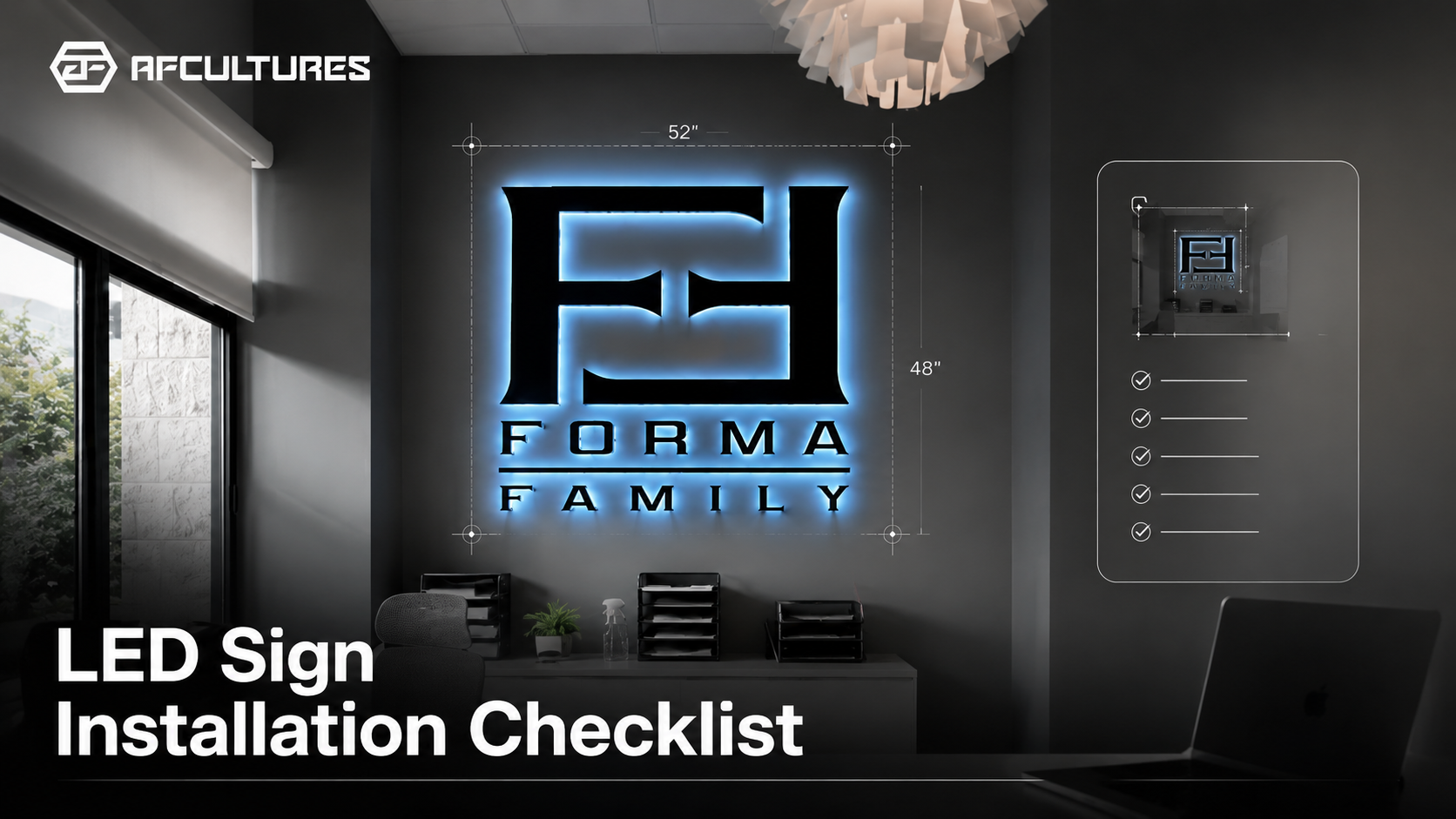
What To Prepare Before Installing An LED Business Sign
A smooth LED business sign installation starts before installation day. Learn what wall photos, power access, placement details, measurements, and timeline information to prepare.
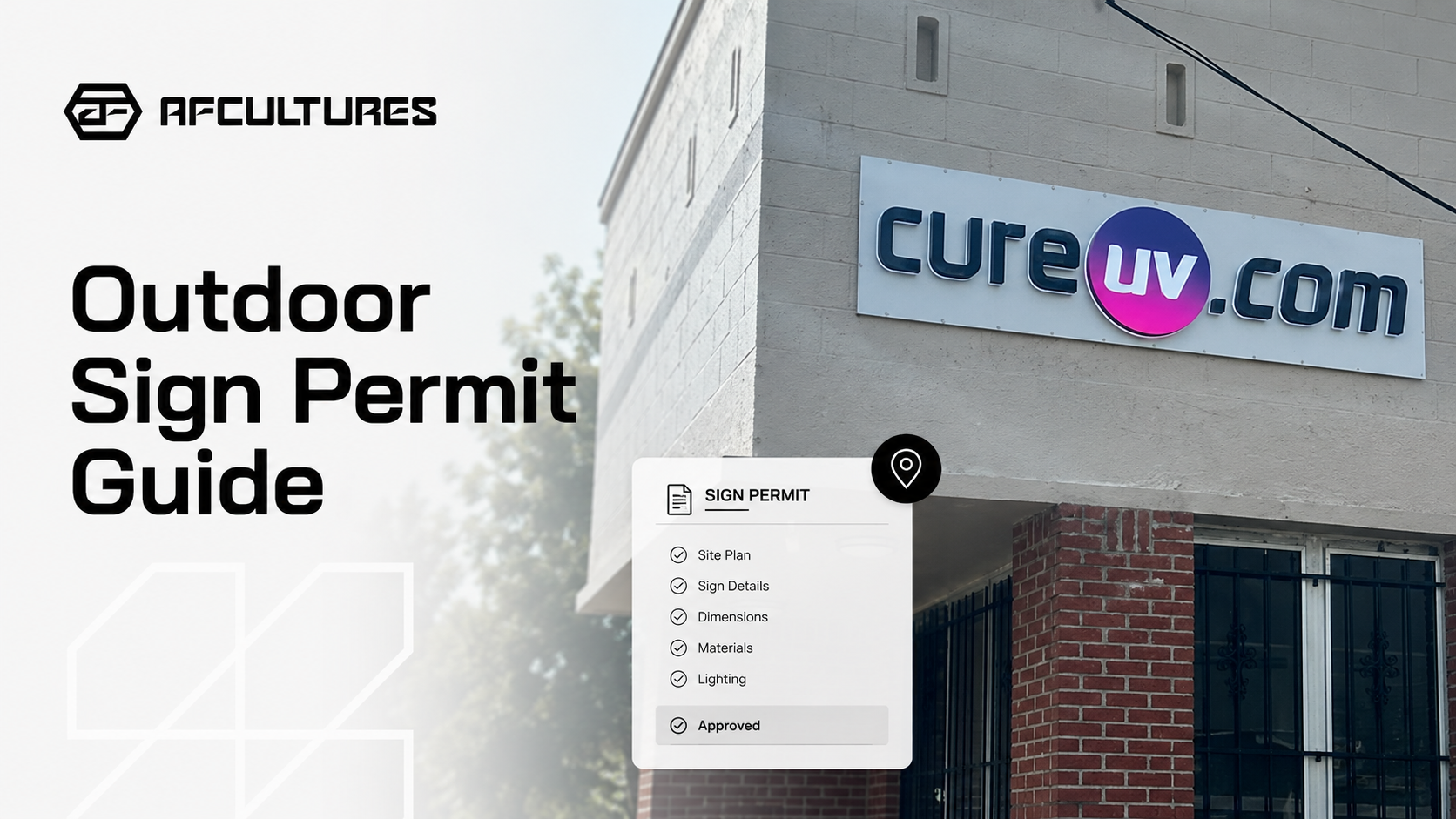
Do You Need A Permit For An Outdoor Business Sign? | AFCULTURES
Before producing an outdoor business sign, owners should check permit rules, landlord approval, building restrictions, lighting, size, mounting, and site access.
How Much Does A Custom Business Sign Cost? A Practical Budget Guide For Business Owners
Before you compare sign quotes, understand what actually affects the cost of a custom business sign: size, material, lighting, installation, timeline, and project scope.
What Should Be Finalized Before You Approve a Sign?
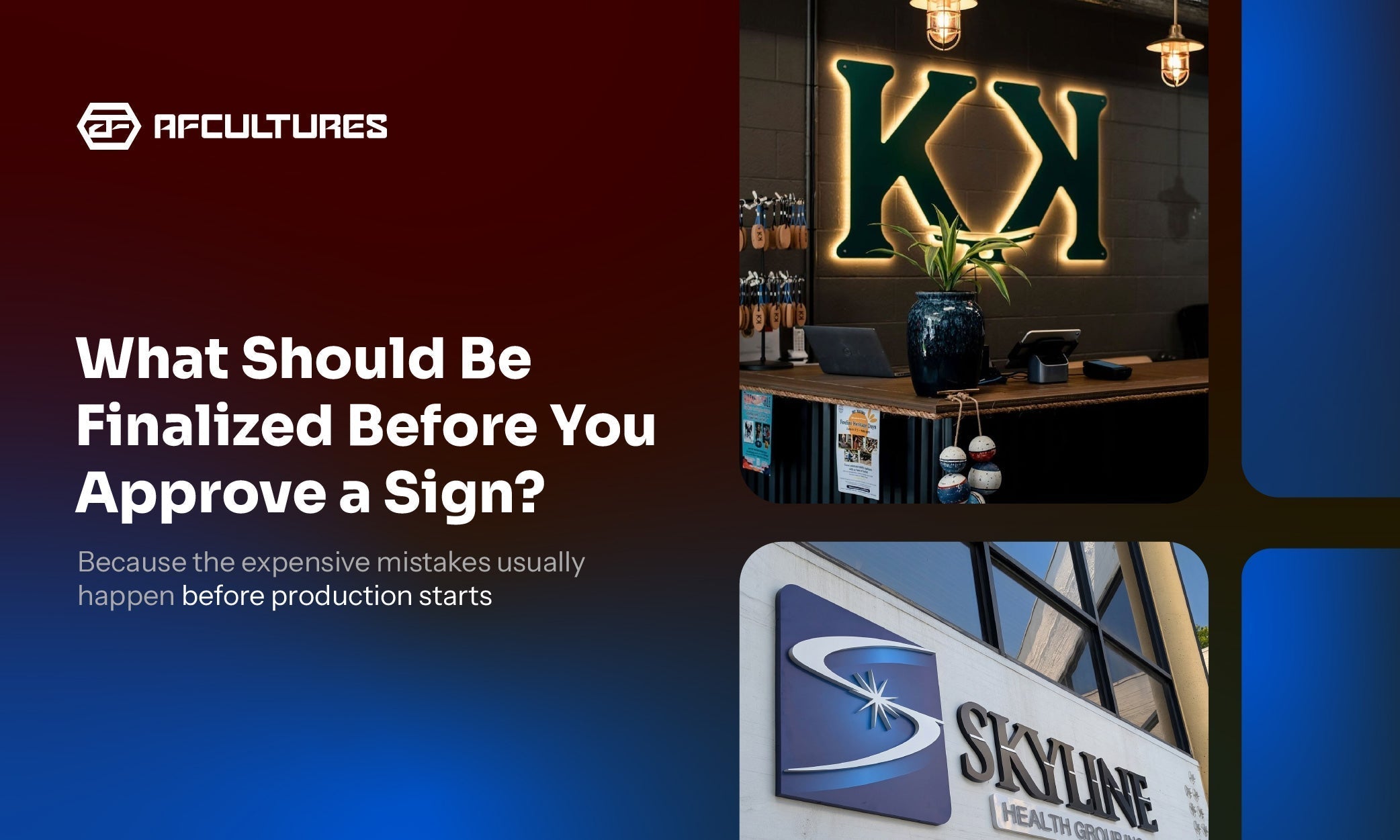
In the signage industry, the most expensive mistakes don’t happen during production. They happen weeks earlier, during the approval phase. When a business owner says "Yes" to a mockup, they often assume the sign will naturally fit the space. But a 2D render on a bright screen is a world away from a physical asset on a textured wall under shifting light. At AFCULTURES, we believe that approval is not just about liking a design; it’s about resolving the reality of the build. Before you sign off on your next project, here is the essential checklist to ensure your investment becomes a legacy, not a liability. 1. Has the scale been tested on the actual wall? A common trap is approving a sign based on how "big" it looks in a PDF. But size is relative. A 48-inch logo can command a small office but disappear on a 20-foot lobby wall. The AFCULTURES Standard: We don't just send dimensions, we advocate for physical or digital scale-testing on the actual site. Whether it’s using a 1:1 scale paper template or a verified photo-overlay with a person for reference, you must see the Ratio of Presence before production starts. On the actual wall, not just on a screen 2. Has the placement been proven for the "Entry Path"? Placement isn't just about centering a logo. It’s about the Line of Sight. How does a client see the sign when they first turn the corner? Is it obscured by a pendant light? Is it too high for someone standing at the reception desk? The AFCULTURES Insight: You aren't approving a spot on the wall; you are approving a Visual Handshake. The placement must be proven from the perspective of the approach path, the literal journey your customer takes through the space. From where people actually approach the space 3. Has the lighting behavior been resolved for Day and Night? Light is dynamic. A backlit sign that looks warm and prestigious at 6 PM might look washed out under the heavy California sun at 10 AM. Furthermore, different wall finishes (matte paint vs. polished marble) reflect light in completely different ways. The AFCULTURES Insight: Before you approve, you must understand the Glow Interaction. We engineer our light displacement to be consistent, ensuring a clean 3500K halo that maintains its integrity regardless of the ambient environment. Day. Night. Wall finish. Viewing distance. 4. Has the build been engineered for the "Real World"? This is where "concept" meets "asset". Before you approve, you need clarity on the physical execution: Material Thickness: Will it have the 1.5-inch depth required for a 3D shadow? Mounting Method: Is it a flush mount or a standoff? How will the power supply be hidden? Final Finish: Does the brushed metal match your interior hardware? If these aren't resolved now, they become "surprises" during installation. At AFCULTURES, we prioritize Full-Scope Transparency so you know exactly how the sign is engineered to last a decade. Material thickness, mounting method, and final finish decide the outcome. The Conclusion: Approval is Responsibility The right decision isn't just saying "Go". It's ensuring that every variable, Size, Placement, Lighting, and Build, has been de-risked. When you finalize these details early, you aren't just buying a sign; you are securing your brand's physical legacy. Don't approve a mockup. Approve a reality. Consult with an AFCULTURES Expert to verify your project specs today. Decision-Maker’s FAQ 1. Why should I care about mounting methods this early? Because mounting determines how wires are hidden and how your wall is treated. Deciding this late can lead to visible conduits or structural issues. 2. Can a sign be "too big" for a space? Yes. Over-scaling can make a premium brand look aggressive or desperate. We use Spatial Psychology to find the "Sweet Spot" where the brand feels authoritative but balanced. 3. What is the most common mistake owners make during approval? Approving a 2D PDF without seeing a 1:1 scale template or a sample of the actual material finish.
Which Sign Type Actually Fits Your Business?
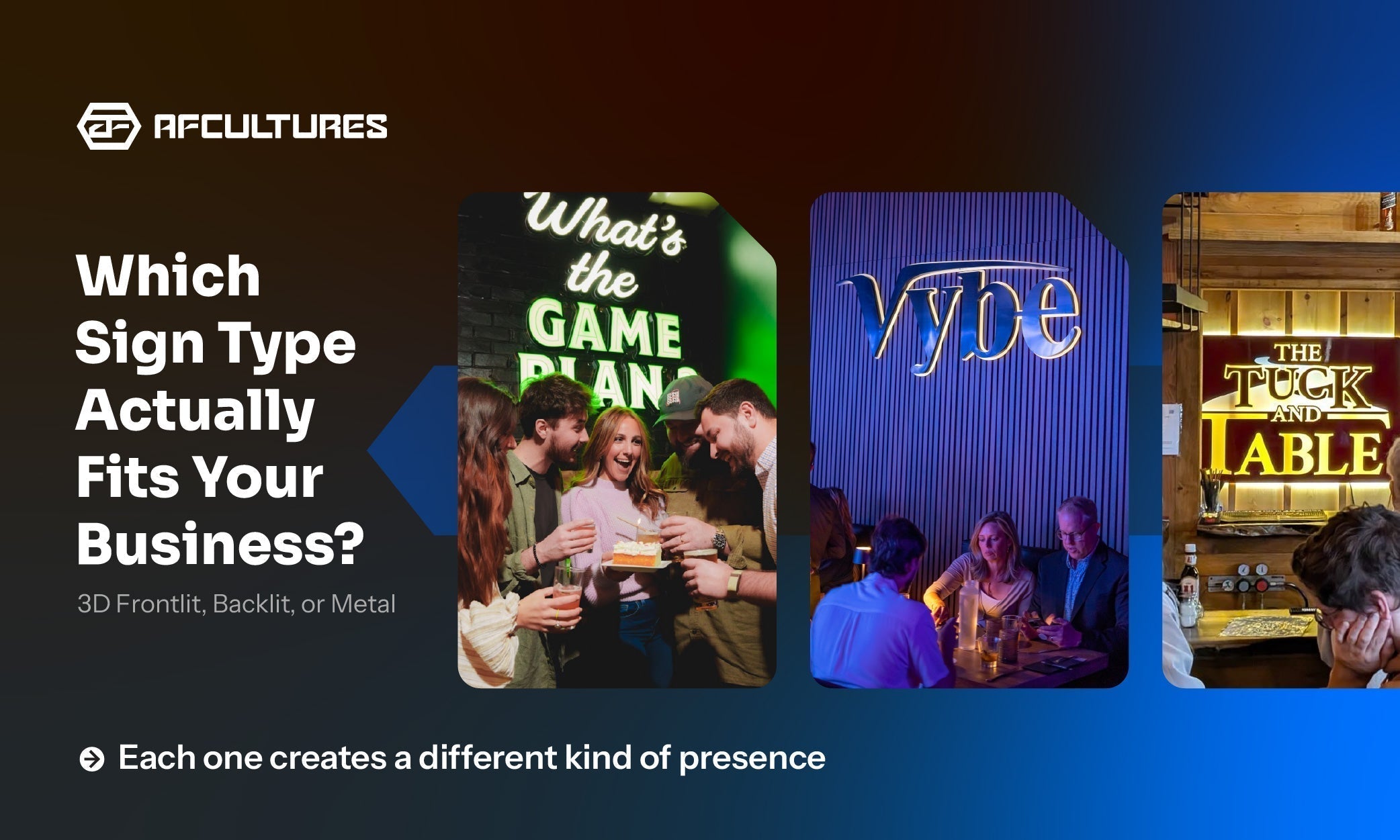
In professional signage, “premium” should not only mean expensive, bright, or visually impressive. A better question is: what does the sign need to communicate in the real space? Sign industry guidance from the International Sign Association points to legibility, information, quality, appropriate scale, and uniqueness as factors that can affect how well a sign performs for a business. That is why choosing a sign type should not be based on aesthetics alone. It should be based on your business category, customer path, viewing distance, lighting conditions, wall surface, and the kind of brand presence you want to create. Some businesses need strong visibility from the street. Some need a refined glow for a premium interior. Others need a sign that feels stable, established, and trustworthy. The right sign type sends the right signal before a customer even walks in. Not Every Premium Sign Fits Every Business Stop choosing based on aesthetics alone. Start choosing based on the Presence your business requires. Quick Answer: Which Sign Type Fits Which Business? If your business needs visibility and immediate impact, a 3D Frontlit sign may be the better fit. This option works well for retail storefronts, restaurants, gyms, high-traffic studios, and businesses that need to be noticed quickly from the street or sidewalk. If your business needs modern refinement and a more dimensional glow, a 3D Edgelit sign may be a better direction. This option works well for premium interiors, boutique spaces, creative brands, tech-forward businesses, and spaces where the sign should feel designed rather than loud. If your business needs trust, permanence, and professional authority, a 2D Metal Backlit sign may be the stronger choice. This option works well for clinics, law firms, corporate lobbies, reception areas, and businesses that want a more established and polished presence. The right choice should consider your brand style, viewing distance, lighting conditions, wall surface, installation location, and the customer impression your business needs to create. 1. 3D Frontlit: The Signal of Visibility and Immediate Impact If your business lives or dies by foot traffic, you need to be impossible to ignore. 3D Frontlit Signs are designed for strong direct visibility. In this lighting style, light shines forward through the face of the letters, which can make the sign easier to notice in storefront, retail, or high-traffic environments. Visibility still depends on several factors, including size, sign angle, location, luminance, and contrast. Best for: Retail storefronts, high-traffic studios, and high-energy brands. The Logic: It tells the world: "We are here, we are open, and we want your attention right now" . The AFCULTURES Standard: We review face color, material, and lighting balance so the sign direction stays aligned with your brand as closely as possible in the real environment. 3D Frontlit: Built for visibility. When your brand needs to lead the conversation and own the street. 2. 3D Edgelit: The Signal of Modern Refinement Not every business needs to scream. Some need to fascinate. 3D Edgelit Signs use light around the edges or side profile of the sign to create a crisp, dimensional glow. Compared with direct front lighting, this style can feel more refined, architectural, and detail-driven. Best for: Modern tech brands, premium interiors, and boutique spaces. The Logic: It communicates: "We are innovative, detail-oriented, and sophisticated." It’s for the brand that values aesthetics as much as function. The AFCULTURES Standard: We aim for a controlled glow that supports the physical depth of the logo without making the sign feel overly harsh in the space. 3D Edgelit: A more refined, dimensional glow. Built for spaces where modern premium aesthetics are the priority. 3. 2D Metal Backlit: The Signal of Trust and Permanence For professional spaces, authority is often found in simplicity. 2D Metal Backlit Signs (often referred to as Metal Halo signs) focus on the solid weight of the material. The light is projected backward against the wall, creating a prestigious "Halo" effect while keeping the face of the sign clean, stable, and dark. Best for: Medical clinics, law firms, corporate lobbies, and reception desks. The Logic: It projects: "We are established. We are reliable. We are here for the long term." It prioritizes credibility and polished professionalism over "flashiness." The AFCULTURES Standard: We review LED temperature, wall surface, spacing, and background conditions so the halo effect feels more integrated with the space. 2D Metal Backlit: Built for clarity and permanence. The standard for professional authority and established trust. 4. The Decision Frame: What Job Does Your Sign Need to Do? The Right Sign Sends The Right Signal At the end of the day, the best sign type is not the one that looks best in isolation. It is the one that works for your business context. Effective signage involves more than an attractive logo or slogan. The International Sign Association notes that materials, lighting, placement, typography, size, location, marketplace, and demographics all matter when a sign needs to be seen, read, and understood quickly. Need to attract Traffic? Go 3D Frontlit. Need to project Design & Innovation? Go 3D Edgelit. Need to build Trust & Credibility? Go 2D Metal Backlit. At AFCULTURES, we don’t just build signs; we help you engineer your brand’s presence in the real world. Every choice, from the lighting type to the material depth, is a foundational decision for your long-term business asset. Stop settle for "just a sign". Not Sure Which Sign Type Fits Your Business? Send your logo, wall or storefront photo, business type, and project location. AFCULTURES can help compare frontlit, edgelit, and backlit options before production starts. → Get A Sign Type Recommendation Frequently Asked Questions (FAQ) 1. Can I combine these sign types? Yes. Many businesses use different sign types in different areas. For example, a storefront may need stronger exterior visibility, while a lobby or reception wall may need a more refined interior presence. 2. Which sign type is best for a dark wall texture? 2D Metal Backlit signs can work well on darker walls because the halo effect may create stronger contrast. However, wall color, texture, and finish should be reviewed first because the backing surface can affect how evenly the glow appears. 3. Is 3D Edgelit durable enough for outdoor use? Outdoor use depends on the material, lighting system, sealing, mounting method, wiring plan, and local site conditions. 3D Edgelit signs are often used for premium interior branding, but outdoor suitability should be confirmed based on the specific project. 4. What should I send before choosing a sign type? Send your logo file, wall or storefront photo, approximate sign size or wall width, indoor or outdoor location, business type, preferred style, project city/state, and timeline. These details help the team recommend a sign type that fits the real space. Related Reading Halo-Lit vs Front-Lit Signs: Which Lighting Style Fits Your Business? What To Prepare Before Ordering A Custom Sign


Get the latest from AFCultures
Join our list for expert tips, design insights & special deals.