

Restaurant Signage for Multi-Location Brands: What Should Stay Consistent and What Should Adapt?
WHO SHOULD READ THIS
Restaurant owners, operators, franchise groups, and multi-location hospitality brands opening a new location, remodeling an existing space, or trying to make several locations feel more consistent.
Quick Answer
A multi-location restaurant should not copy every sign exactly from one location to the next.
The brand should stay recognizable, but the signage still needs to respond to the building, entrance, customer approach, available wall space, and role of each sign.
A useful planning sequence is: STANDARDIZE → ADAPT → PRIORITIZE → DOCUMENT
Standardize what makes the brand recognizable.
Adapt what depends on the physical location.
Prioritize the signs that matter most to the customer journey.
Then document what should repeat as the brand grows.
Consistency Does Not Mean Copying the Same Sign Everywhere
When a restaurant expands to a second, third, or tenth location, the easiest approach may seem obvious:
Use the same sign again.
But the same sign can behave very differently in a different space.
One location may have a wide storefront.
Another may sit inside a shopping center.
One entrance may face the parking lot directly.
Another may be recessed, partially hidden, or approached from the side.
The brand should still feel consistent.
But the signage plan should respond to what customers will actually experience at each location.
1. STANDARDIZE: Decide What Must Always Feel Like the Brand
Start by separating the brand elements that should remain consistent from the physical elements that can change.
Depending on the restaurant, the consistent layer may include:
- Logo and wordmark
- Core brand colors
- General visual character
- Primary identity hierarchy
- How supporting signs relate to the main identity
The goal is that a returning customer can recognize the brand even when the building is different.
That does not require every sign to have the same dimensions, placement, or visual weight.
It requires the locations to feel like they belong to the same brand family.
This is also why not every business sign needs to look exactly the same.
Opening another restaurant location?
Send AFCULTURES your brand files, photos of an existing location, and wide photos of the new space. We can help identify what should repeat and what should adapt before the new signage is developed.

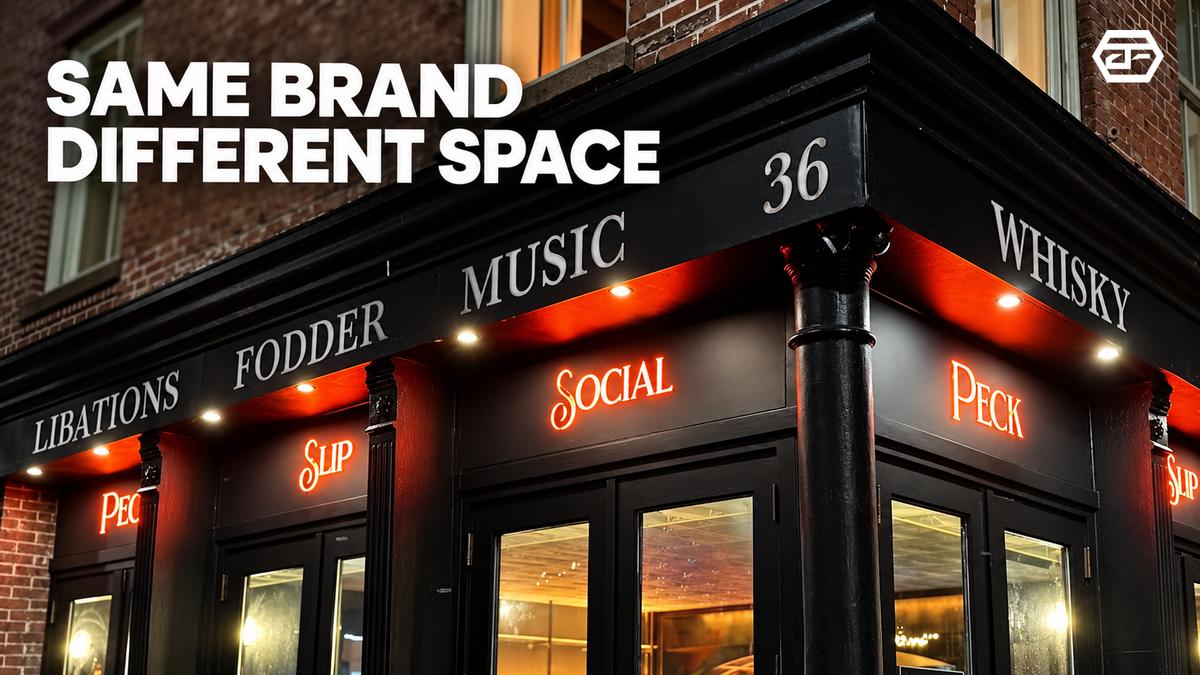
The identity should remain recognizable even when the building, sign proportions, and surrounding environment change
2. ADAPT: Let the Building Change the Signage, Not the Brand
The new location may need a different solution because the physical conditions are different.
Look at:
- How customers approach the storefront
- Where the entrance sits
- How much facade space is available
- What can be seen from the parking lot or street
- What customers see after they enter
- Which walls or areas naturally become focal points
A sign that worked perfectly at one restaurant may feel too small, too dominant, or poorly positioned at another.
This is where multi-location planning becomes more useful than simply repeating a production file.
Keep the brand logic. Adapt the physical execution.
3. PRIORITIZE: Not Every Location Needs the Same Number of Signs
A larger restaurant may require several touchpoints.
A simpler space may need fewer.
Instead of starting with a fixed sign list, identify what customers need at each location.
A useful hierarchy is: IDENTIFY → ENTER → ORIENT → EXPERIENCE
The exterior sign may establish the brand.
The entrance may confirm that customers are in the right place.
Interior signs may support movement, ordering, pickup, seating, or another important destination.
A hero interior sign may create one memorable brand moment.
These different jobs can still belong to one connected signage system.
The key is not making every location contain the exact same number of pieces.
It is making sure every location communicates the brand clearly.

Each location should be planned from the customer's actual approach, not from the dimensions of the previous sign
4. DOCUMENT: Turn What Works Into a Repeatable System
Once a restaurant has several locations, every new project should not restart from zero.
Document the decisions that are meant to repeat.
That may include:
- Approved logo use
- Primary versus supporting sign roles
- Preferred visual hierarchy
- What information belongs on the main sign
- What can change depending on the location
- Reference photos from successful locations
The purpose is not to create a rigid template.
It is to make future decisions faster without losing brand consistency.
The International Sign Association also treats on-premise signage as part of a business's broader marketing activity. Its Signs for Marketing resource is a useful reference when thinking about signage as part of the brand experience rather than as a one-off object.
Managing signage across several restaurant locations?
Send us photos of your current locations, brand files, and the next space you are planning. AFCULTURES can help separate the elements that should stay consistent from the decisions that need to respond to each site.
What Should Stay Consistent—and What Can Change?
| Usually Keep Consistent | Usually Adapt to the Location |
|---|---|
| Logo and core identity | Sign size |
| Brand color direction | Placement |
| Visual hierarchy | Number of supporting signs |
| Relationship between primary and secondary signs | How the sign fits the architecture |
| Overall brand character | Customer approach and viewing conditions |
A multi-location signage system should be recognizable without becoming rigid.
A 5-Question Check Before Opening the Next Restaurant
Before copying signage from an existing location, ask:
- What must stay the same for customers to recognize the brand?
- What is different about the new storefront or interior?
- Which sign is the primary identity at this location?
- Which supporting signs are actually necessary here?
- What should be documented so the next location is easier to plan?
If every answer is simply “copy the previous location,” the new site probably has not been reviewed closely enough.
Frequently Asked Questions
Should every restaurant location use the exact same signage?
No. Core brand elements should stay recognizable, but dimensions, placement, supporting signs, and visual emphasis may need to change with the building and customer journey.
What should a restaurant brand standardize first?
Start with the core identity: logo use, color direction, primary sign hierarchy, and the relationship between major and supporting signs. Site-specific decisions can then adapt around that foundation.
When should a restaurant create a signage system?
It becomes especially useful when the brand is opening additional locations, remodeling multiple sites, or repeatedly making the same signage decisions from scratch.
Scale the Brand, Not Just the Sign
Expansion creates a new signage problem.
The question is no longer only: “What sign should we put here?”
It becomes: “How should this location feel unmistakably like our brand without pretending every building is the same?”
Keep the identity consistent.
Let the site shape the execution.
Then document what works so the next location becomes easier.
Opening, remodeling, or scaling a restaurant brand?
Send AFCULTURES your brand files, current-location photos, new-site photos, number of locations, and target timeline. We can help turn those individual projects into a more consistent signage system as the brand grows.