


What Sign Shops Should Check Before Outsourcing Channel Letter Fabrication
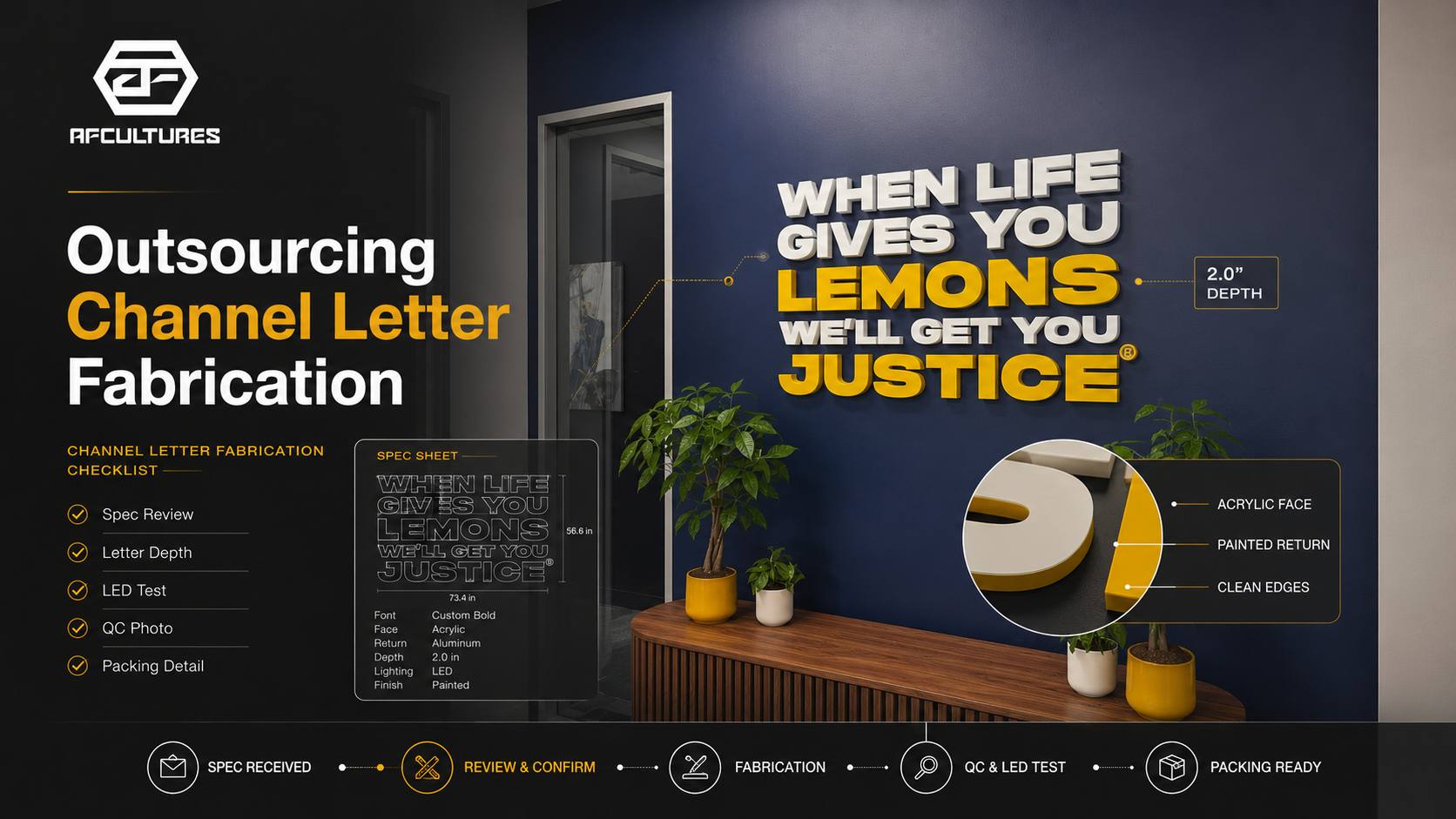
Outsourcing channel letter fabrication is not only about finding a lower production cost.
For sign shops, agencies, and resellers, outsourcing means trusting another team with the quality, timeline, specs, packing, and final impression your client will see.
That is why a fabrication partner should be evaluated before the job goes into production.
Channel letters are custom, three-dimensional sign elements that may involve metal returns, acrylic or metal faces, LED modules, mounting hardware, wiring, and installation requirements. For illuminated signs in the U.S., electrical standards and inspection expectations may also apply.
A good outsourcing process protects more than the sign.
It protects the client relationship behind it.
Quick Answer: What Should Sign Shops Check Before Outsourcing Channel Letters?
Before outsourcing channel letter fabrication, sign shops should check:
-
Fabrication capability
-
File and spec requirements
-
Letter construction
-
Lighting style
-
UL/NEC considerations for electric signs
-
Mounting method
-
QC process
-
Packing and shipping plan
-
Lead time
-
Communication standards
-
White-label or partner-friendly boundaries
The right partner should help flag issues early, not stay silent until the job is already delayed.

Need A Reliable Fabrication Partner Behind The Scenes?
Send your drawings, specs, quantity, deadline, and shipping location. AFCULTURES can review material, lighting, packing, and timeline before quoting.
1. Check What The Fabricator Can Actually Build
Not every fabrication partner is the right fit for every channel letter job.
Before sending a project, confirm what the shop can produce.
Ask whether they handle:
-
Combination-lit letters
-
Non-illuminated dimensional letters
-
Trim cap letters
-
Trimless letters
-
Custom logo shapes
-
Raceway or remote mounting
-
Indoor and outdoor sign packages
Channel letters can vary widely by lighting style, face material, returns, backs, depth, trim, LED placement, and mounting method.
That is why a sign shop should not only ask, “Can you make channel letters?”
The better question is: Can you make this specific channel letter package to the required specs?
2. Send Complete Specs Before Asking For A Final Quote
A vague quote request creates risk for both sides.
The more complete the specs, the easier it is for the fabrication partner to review feasibility, price the job, and flag potential issues.
Before asking for a fabrication quote, send:
| Spec Detail | Why It Matters |
|---|---|
| Artwork or vector file | Helps check logo shape, strokes, and production feasibility |
| Overall size | Affects material, lighting, packing, and shipping |
| Letter depth | Affects structure, lighting, and visual profile |
| Face material | Affects light output and appearance |
| Return material/color | Affects side appearance and durability |
| Lighting style | Affects LED placement, wiring, and power supply |
| Mounting method | Affects fabrication and installation prep |
| Quantity | Affects production planning |
| Deadline | Helps confirm realistic lead time |
| Shipping location | Affects packing and freight planning |
A strong fabrication partner should review the specs and flag missing information before production starts.
3. Confirm Lighting And Electrical Requirements
Illuminated channel letters need more technical coordination than non-illuminated letters.
Lighting affects appearance, visibility, wiring, power supply, mounting, and inspection expectations.
In the U.S., the International Sign Association notes that electric signs must comply with NEC Article 600 for installation and UL 48 for product safety.
For sign shops, the practical takeaway is simple:
Do not treat lighting as an afterthought.
Before production, clarify:
-
Front-lit, halo-lit, or combination-lit
-
LED color temperature
-
Face color and translucency
-
Power supply requirements
-
Wiring path
-
Raceway or remote mounting
-
Listing/label expectations
-
Installer or local authority requirements
This is especially important when the sign will be installed outdoors, in a plaza, or in a location where inspections may be involved.
A small missing detail can create a large delay later.
Have A Channel Letter Job That Needs Spec Review?
AFCULTURES can review drawings, lighting direction, mounting method, packing needs, and timeline before quoting.
4. Ask What QC Photos You Will Receive
For trade partners, quality control is not just an internal step.
It is part of trust.
Before working with a fabrication partner, ask what proof they can provide before shipping.
Useful QC photos may include:
-
Raw fabrication progress
-
Face and return finish
-
Paint or color check
-
LED placement
-
Lighting test
-
Back or mounting detail
-
Raceway or wiring detail
-
Final assembled sign
-
Packing photos
QC photos help sign shops catch issues earlier and communicate more confidently with their own clients.
They also reduce ambiguity when the partner is producing behind the scenes.
A good QC process should make the sign shop feel informed, not left waiting.

5. Review Packing And Shipping Before Production Ends
Packing is easy to ignore until something arrives damaged.
Channel letters can include acrylic faces, metal returns, paint finishes, wiring, LEDs, power supplies, mounting patterns, and fragile details. These parts need protection during shipping.
Before approving production, ask:
-
How will letters be protected?
-
Are faces protected from scratches?
-
Are power supplies and accessories labeled?
-
Are mounting templates included?
-
Are crates or cartons appropriate for the sign size?
-
Are packing photos provided before shipment?
-
Is the shipment suitable for the destination and handling method?
Packing is not only logistics.
It is part of the final quality experience.
For sign shops, a damaged shipment can mean more than replacement cost. It can mean missed installation dates, frustrated clients, and extra communication pressure.
6. Confirm Lead Time And Communication Standards
A trade partner should not disappear after receiving the deposit.
Sign shops need clear communication because they are often managing the end client, installer, landlord, and project schedule at the same time.
-
Estimated production timeline
-
What starts the timeline
-
When proofs or drawings are approved
-
How changes affect lead time
-
When QC photos are sent
-
When packing and shipping details are confirmed
-
Who communicates project updates
-
What happens if a spec issue appears
Clear communication protects the project timeline.
It also protects the sign shop’s credibility with the end customer.
Common Outsourcing Mistakes To Avoid
Before sending a channel letter project to an outside fabricator, watch out for these mistakes:
-
Asking for a final quote with incomplete specs
-
Not confirming lighting style early
-
Forgetting UL/NEC expectations for electric signs
-
Not clarifying raceway vs remote mounting
-
Skipping QC photo expectations
-
Waiting until the end to discuss packing
-
Assuming lead time before drawings/specs are approved
-
Choosing a partner only by lowest price
-
Not confirming white-label or client-relationship boundaries
The best fabrication partner does not only make the sign.
They help protect the project before problems reach the client.
What To Send For A Trade Fabrication Quote
To get a clearer fabrication quote, prepare:
| What To Send | Why It Matters |
|---|---|
| Vector artwork or drawings | Helps review production feasibility |
| Dimensions | Affects material, lighting, packing, and cost |
| Lighting style | Front-lit, halo-lit, combination-lit, or non-illuminated |
| Material preferences | Face, return, back, trim, paint, finish |
| Mounting method | Raceway, remote mount, rail, or other requirement |
| Quantity | Helps production planning |
| Install location type | Indoor, outdoor, plaza, storefront, office, etc. |
| Deadline | Helps confirm realistic scheduling |
| Shipping address | Helps estimate packing and freight needs |
| Required QC photos | Aligns expectations before production |
The clearer the specs, the fewer assumptions the fabrication partner has to make.
Ready To Send A Channel Letter Project For Review?
Send your specs, drawings, quantity, deadline, and shipping location. AFCULTURES can review the project and help confirm a fabrication direction before production starts.

Frequently Asked Questions
What should a sign shop send before outsourcing channel letter fabrication?
Send vector artwork or drawings, dimensions, lighting style, material preferences, mounting method, quantity, deadline, shipping address, and any required QC or packing expectations.
Why do UL/NEC considerations matter for channel letters?
Illuminated signs in the U.S. may involve NEC Article 600 for installation and UL 48 for product safety. Requirements can vary by project and authority, so sign shops should clarify expectations before production.
What QC photos should a fabrication partner provide?
Useful QC photos may include fabrication progress, paint or finish check, LED placement, lighting test, back and mounting details, final assembled sign, and packing photos.
Should sign shops choose a fabricator only by price?
No. Price matters, but sign shops should also check specs, lighting, lead time, QC, packing, communication, and partner boundaries before choosing a fabrication partner.


