


Why A Site Survey Matters Before Sign Production
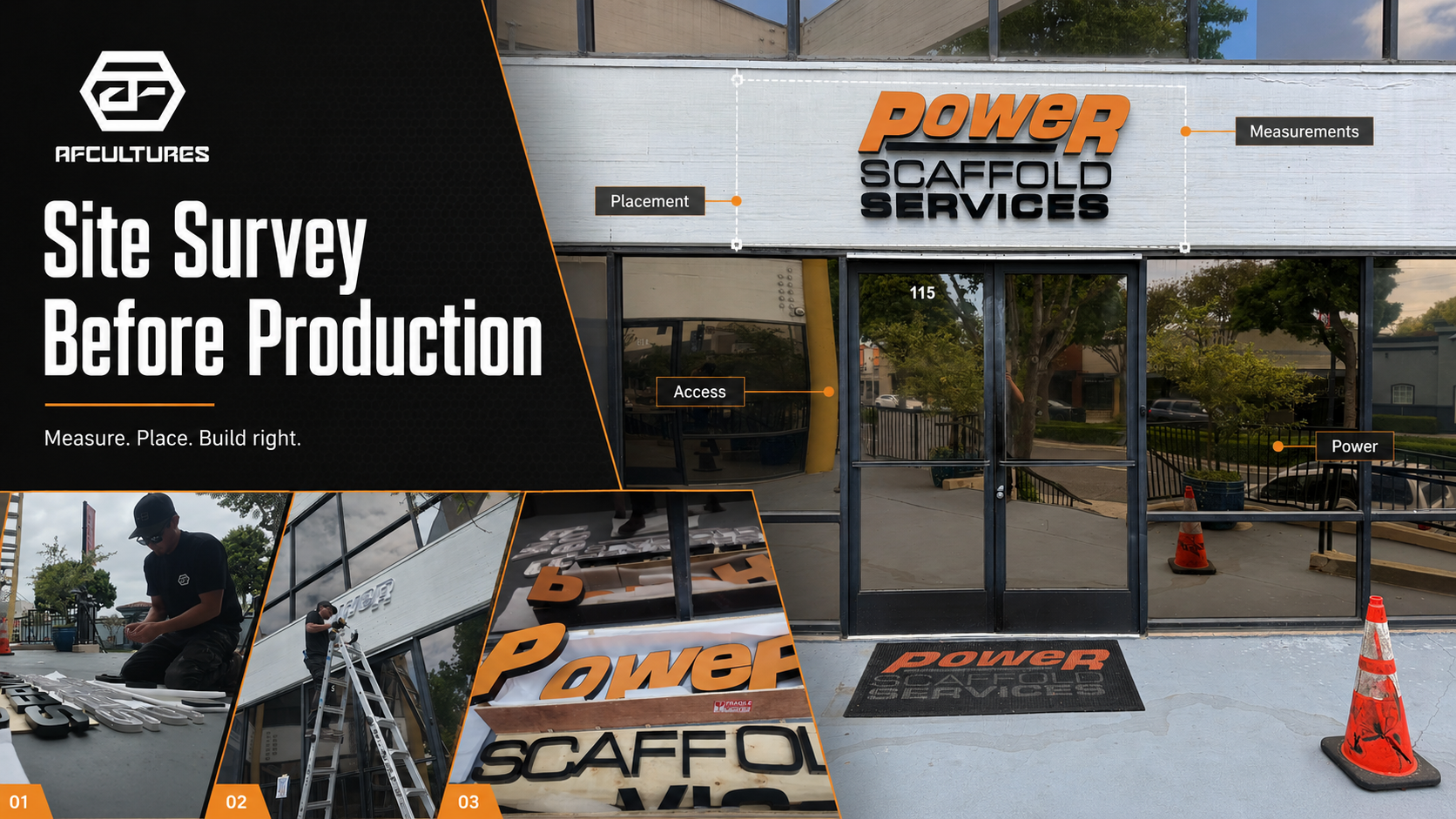
A custom sign should not be planned from a logo file alone.
Before production begins, the sign team needs to understand the real site: the wall, storefront, viewing distance, mounting surface, power access, installation height, and any approval requirements that may affect the project.
That is where a site survey matters.
A site survey helps confirm whether the sign direction works in the actual environment before time and budget go into fabrication.
The Sign Research Foundation notes that viewing distance, size, and location are important factors when deciding sign placement. In real life, signs are also viewed around buildings, landscaping, parked cars, windows, columns, and other visual conditions.
That is why site context should be checked before production, not after the sign is already built.
Quick Answer: What Is A Sign Site Survey?
A sign site survey is a review of the real location where the sign will be installed.
It may include checking:
-
Wall or storefront dimensions
-
Installation surface
-
Viewing distance
-
Sign placement
-
Power access
-
Obstacles or visual blockers
-
Existing signage
-
Mounting conditions
-
Installation access
-
Landlord, plaza, or city requirements
A site survey helps the sign team understand what can affect design, production, installation, approval, and timeline.
Plan The Site Before You Build The Sign
If you are planning a storefront sign, lobby sign, or illuminated sign, AFCULTURES can help review the project context before production starts.
Send your logo, wall photo, project location, and timeline so the team can check the right next step.

1. A Site Survey Confirms The Real Wall Or Storefront
A mockup can show the design direction, but the real wall still matters.
The wall or storefront affects sign size, placement, mounting, visibility, and lighting. A sign that looks balanced in a flat design file may need adjustment once the team sees the actual installation area.
A site review can help check:
-
Wall width and height
-
Door and window placement
-
Wall texture and material
-
Existing holes or old signage
-
Background color
-
Nearby lights or shadows
-
Ceiling height
-
Available sign band or facade area
This is especially important for storefronts, restaurants, salons, clinics, gyms, retail spaces, offices, and any business with an outdoor sign facing customers.
A sign should feel like it belongs on the building, not like it was forced onto the wall.
2. Viewing Distance Changes Sign Size And Placement
The right sign size depends on how people will actually see it.
A lobby sign viewed from a few feet away does not need the same sizing logic as a storefront sign viewed from a parking lot or street.
The International Sign Association identifies size, sign angle, location, luminance, and contrast as key factors in sign visibility.
That means sign planning should consider:
-
Where customers first see the sign
-
Whether they are walking or driving
-
How far away they are
-
Whether anything blocks the sign
-
Whether the sign needs to work after dark
-
Whether the wall color gives enough contrast
A site survey helps move the conversation from “What size looks good?” to “What size works from the real viewing distance?”
That difference matters.
Not Sure If Your Sign Will Be Visible Enough?
AFCULTURES can review your wall photo, viewing distance, and sign location before recommending size, material, and lighting direction.
3. Mounting Surface Affects The Build
Not every wall can be treated the same.
A sign installed on drywall may require a different mounting approach from a sign installed on brick, stucco, concrete, tile, glass, metal panels, or wood.
The mounting surface can affect:
-
Hardware
-
Spacing
-
Weight limits
-
Installation time
-
Wiring path
-
Wall repair needs
-
Final visual alignment
-
Whether professional installation is required
This is one reason a wall photo is helpful, but a site survey or detailed site information may still be needed for more complex projects.
The goal is not only to make the sign look right.
The goal is to make sure the sign can be installed cleanly and safely in the real location.

4. Power Access Matters For Illuminated Signs
Illuminated signs need more planning than non-illuminated signs.
Before production, the team should understand where power may come from and how wiring can be handled.
For LED or illuminated signs, project planning may need to check:
-
Nearby power access
-
Plug-in vs. hardwired setup
-
Whether wiring can be hidden
-
Indoor or outdoor use
-
Wall construction
-
Installer or electrician needs
-
Local electrical requirements
The National Electrical Code is widely used in the electrical industry for installation safety requirements. For business owners, the practical takeaway is simple: power planning should not be left until installation day.
A sign can be well-made and still feel unfinished if the wiring path was not planned early.
5. Approval And Installation Access Can Affect Timeline
For outdoor signs, storefront signs, and signs in commercial plazas, production may also depend on approval or access details.
Before the sign is built, it helps to check:
-
Landlord requirements
-
Plaza or property rules
-
City permit considerations
-
Building access
-
Installation height
-
Ladder or lift access
-
Parking or loading access
-
Allowed installation hours
-
Existing sign removal
-
Weather or outdoor conditions
The International Sign Association provides permitting resources for sign challenges across federal, state, and local levels, which is a reminder that sign approval can vary by location.
A site survey helps identify these issues earlier, before they create production or installation delays.
What To Send Before A Site Survey Or Pre-Production Review
You do not need to have professional drawings before asking for help.
But you should send enough context for the team to understand the real site.
| What To Send | Why It Matters |
|---|---|
| Logo file | Helps review shape, size, and production feasibility |
| Wall or storefront photo | Shows the real installation environment |
| Approximate wall width | Helps plan scale and proportion |
| Installation location | Helps check placement and mounting needs |
| Indoor or outdoor use | Affects material, lighting, and approval path |
| Power access photo | Helpful for illuminated signs |
| Project city/state | Helps with outdoor planning considerations |
| Desired timeline | Helps plan mockup, production, and installation |
The more context you provide, the fewer assumptions the project needs.
Common Mistakes To Avoid
Before sign production starts, avoid these mistakes:
-
Approving a sign based only on the logo file
-
Not sharing the real wall or storefront photo
-
Guessing sign size without checking viewing distance
-
Choosing lighting without checking the wall surface
-
Forgetting power access for illuminated signs
-
Ignoring landlord or plaza requirements
-
Waiting until installation day to think about access
-
Not mentioning a deadline early
Most production problems do not start in the workshop.
They start when the site was not checked clearly enough before production.
Ready To Plan Your Sign Before Production?
Send your logo, wall or storefront photo, project location, and timeline. AFCULTURES can help review the site context and recommend a buildable sign direction before fabrication begins.

Frequently Asked Questions
What is a sign site survey?
A sign site survey is a review of the location where the sign will be installed. It may check wall dimensions, surface type, viewing distance, power access, mounting conditions, installation access, and approval requirements.
Do all custom signs need a site survey?
Not every small indoor sign needs a full site survey. But a site review is helpful for outdoor signs, illuminated signs, storefront signs, large signs, difficult walls, or projects with landlord or permit considerations.
Why does viewing distance matter before production?
Viewing distance affects sign size, letter size, placement, and readability. A sign viewed from a lobby entrance has different requirements from a sign viewed from a street or parking lot.
What should I send before a sign site review?
Send your logo file, wall or storefront photo, approximate wall width, installation location, indoor or outdoor use, power access photo if needed, project city/state, and desired timeline.


