
News
Why Most Business Signs Fail, Before They’re Even Built
Most signage projects in the U.S. start with a simple, common-sense phrase: “We need a sign”. It sounds straightforward, right? But here’s the reality we see every day across SoCal: that’s exactly where the wheels start to fall off. At AFCULTURES, we’ve learned that a failing sign isn’t usually a manufacturing issue, it’s a planning issue. 1. The "Definition Gap": More Than Just a Name on a Wall The issue isn’t the sign itself, it’s the vacuum of information that follows the decision to build one. Most business owners focus on the "What" (The Logo), but they completely ignore the "How" and the "Where." Without defining the approach path of your customers or the environmental constraints of your lobby, you are gambling with your brand’s first impression. A sign that isn't planned for its specific coordinate on the wall is just a piece of metal competing for attention in a room it doesn't understand. The three questions that change everything: Placed where? Seen from where? Sized how? If you can't answer these, the build shouldn't start. 2. The Contextual Fallacy: Why Renders Lie We’ve all seen them - those 2D mockups that look flawless on a MacBook screen. But a sign is never judged in a vacuum. It lives inside a space with shifting light, specific viewing angles, and real-world textures. A logo that looks balanced on a white background can completely "disappear" or feel intrusive when mounted on a dark concrete surface or a complex marble grain. This is why we lean so hard into Proof of Judgment. We don't just "take orders". We analyze how your brand will actually "live" in its physical context, ensuring it commands the room instead of just occupying it. Context changes everything. A brand must maintain its integrity across different lighting and textures, or it loses its authority 3. The Foundation: Placement, Lighting, Scale To turn a sign into a 10-year business investment, you need to nail three foundational pillars: Placement: It needs to be the definitive focal point of the room, guiding the eye naturally as soon as someone walks through the door. Lighting: Light is a mood, not a utility. We engineer Light Displacement to ensure a smooth halo effect, no cheap LED "hot spots" that distract from your prestige. Scale: It needs the right "weight" and thickness to feel permanent and authoritative. These aren't "finishing touches." They are the DNA of a successful project. This is where projects are won or lost. Engineering the ambiance is just as important as engineering the steel 4. Choosing a Partner, Not Just a Vendor Choosing the right partner means finding someone who isn't afraid to tell you "no" if a design won't work in reality. From navigating complex City Permits to managing a professional U.S.-wide installation, you need transparency, not just a quote. When the plan is solid, there’s no "fixing it later." You get a real-world brand presence that’s built right, looks right, and actually lasts. Stop adding signs. Start designing how your space works. That's the difference between a one-time build and a lasting legacy. 5. The Conclusion: Design Your Handshake Stop thinking about "buying a sign." Start thinking about designing the first physical handshake your business has with the world. When you prioritize planning over production, you aren't just building a sign, you’re building a legacy. Is your space working for your brand or against it? Let's talk spatial strategy today. Quick FAQs 1. Why does AF care so much about "Planning"? Because a beautiful sign in the wrong spot is a wasted investment. We want your brand to command the room, not just occupy it. 2. Is 3500K lighting really that big of a deal? Absolutely. It’s the architectural standard for a reason. It feels high-end and inviting, unlike the sterile, "hospital-white" lights you see in cheap shops. 3. Do you really handle the Permit process? Yes. We believe in Full-Scope Transparency. We handle the City red tape so you can focus on running your business.
Why Build Quality Only Shows Up Up Close
In the signage industry, distance is a deception. From 30 feet away, most signs look "okay" in a filtered photo. But your clients don't experience your brand from across the street. They judge it at the front door, standing just inches away from your first physical handshake. That’s when the "standard" signs start to reveal their flaws. At AFCULTURES, we don’t optimize for the photo-op; we optimize for the Close-up Inspection. 1. Structural Integrity: Beyond the Hollow Shell Most signs in the U.S. are built light and thin to save on shipping costs. But a premium brand needs Physical Authority. When you step closer to an AFCULTURES sign, you notice the 1.5-inch architectural-grade depth. This isn't just a design choice; it’s engineering. This specific thickness creates a powerful 3D shadow that anchors your brand to the wall. It feels like an inseparable part of the building, not a temporary decoration. Hand-finished edges. No industrial raw cuts. Execution that survives the closest inspection. 2. The Precision of the Finish: Mastered by Hand Up close, the "industrial look" of mass production becomes obvious jagged edges, heat marks, and raw laser cuts. True refinement is found in the seams. Our execution is defined by hand-finished edges. By manually refining every curve, we eliminate the harsh imperfections of factory output. This obsession with detail ensures that even under the scrutiny of high-intensity lobby lighting, your brand remains flawless. This is where "craftsmanship meets brand expression". Hand-finished edges. No industrial raw cuts. Execution that survives the closest inspection. 3. The Science of Light Displacement: 3500K Perfection One of the most common failures in signage is the "hot spot", visible dots of LED light that make a logo look cheap. We approach illumination as Light Engineering. By using high-density LED arrays and specialized diffusers, we ensure a consistent 3500K glow. This neutral-warm temperature is calibrated to match high-end interior design, providing a prestigious "halo" that respects the ambiance of your space without creating visual noise. Consistent 3500K glow. Zero hot spots. Engineering the right mood for your business context 4. Accountable Partnership: From Permit to Presence Building a great sign is only half the battle. Navigating City Permits and U.S., wide installation is where most projects fail. At AFCULTURES, we advocate for "Full-Scope Transparency". We don't hide City fees or installation risks. Whether we provide a 1:1 scale template or manage a professional on-site setup via our partner network, we take full accountability for the end result. Transparent quoting. US-wide installation. We build assets, not just signs. The AFCULTURES POV: A 10-Year Business Asset We don't see signage as a construction expense. We see it as a long-term business asset. When something is built right, you don’t have to question it, you just feel the quality the moment you walk in. Stop settling for signs that only look good from a distance. Build for the close-up. FAQs 1. Why is "hand-finishing" better than standard machine cutting? Machine cutting leaves microscopic burrs. Hand-finishing ensures every edge is smooth, reflecting light perfectly without distortion. 2. Do you handle the city permit process for me? Yes. We discuss permit requirements and fees upfront so there are no surprises during the project execution. 3. How long should a premium metal sign last? Our signs are engineered as 10-year assets, supported by a 4-year warranty to ensure your brand presence remains consistent.
Front-lit or Backlit? The Business Owner’s Guide to Choosing the Right Lobby Sign
You’ve just secured a prime location in California or Texas. You’ve invested heavily in the interior: the floors, the lighting, the furniture. Now, it’s time to put your brand on the wall.But when you look at the options, you hit a crossroad: Front-lit or Backlit? At AFCULTURES, we’ve helped thousands of Founders across the U.S. answer this question. It’s not just about what looks "cool", it’s about the specific "vibe" your business needs to project. 1. Backlit (The Halo Effect): Command with Authority Backlit signs create a 3D shadow effect that highlights the texture of premium walls like stone or marble If you are running a law firm, a high-end medical spa, or a corporate executive office, Backlit is your power move. Why it works: Instead of the light coming at the viewer, it bounces off the wall, creating a soft "Halo" around each letter. It doesn't scream for attention, it calmly commands respect. The "Texture" Advantage: Backlit signs are incredible on textured walls like marble, reclaimed wood, or dark stone. The light highlights the grain of your wall, making the entire lobby look ten times more expensive. Expert Tip: We recommend a 3500K Warm Glow for these settings. It’s sophisticated, inviting, and far from the "sterile hospital white" you see in cheap alternatives. 2. Front-lit: Be Impossible to Ignore Front-lit signs ensure maximum visibility and vibrant color recognition, perfect for high-traffic retail or gym lobbies For Gyms, Fitness Studios, and high-energy Retail shops, Front-lit is the undisputed winner. Why it works: You need impact. You want your logo to be the first thing a client sees when they park their car or step through the door. The vibrant, direct light makes your brand colors pop. Energy & Visibility: Front-lit signs project energy. They tell your clients, "This is where the action is." The AF Standard: We don't just use standard LEDs. Our Front-lit signs are engineered to be bright but balanced. No "hot spots," just a clean, uniform glow that looks professional under any lobby lighting. 3. The "Color Identity" Trap: Protecting Your Brand DNA Our UV-Precision technology ensures your physical brand color matches your digital DNA with 100% accuracy One of the biggest risks in physical signage is Brand Dilution. A cheap sign maker might use standard vinyl or low-grade ink that "looks close enough" to your logo. But under lobby lights, "close enough" is a failure. We take your brand colors seriously. Your Navy Blue should not look black. Your vibrant orange should not look orange-red. At AFCULTURES, we use UV-Precision Printing. This technology prints the color directly onto the material, ensuring a 100% Color Match to your digital brand. Your sign won't just be bright; it will be accurate. 4. From Design to Installation: US-Wide Professional Service Full-service installation: From our 1:1 scale templates to our professional US-wide partner network The most common fear we hear from Founders is: "It looks great in the photos, but who is going to put it on my $10,000 marble wall?" We’ve removed the guesswork from the process: The Foolproof DIY: Every AF sign comes with a 1:1 Scale Installation Template. You stick the paper to the wall, drill exactly where the marks are, and you’re done. Professional Installation: If you prefer to stay hands-off, we have a network of Professional Installation Partners across the U.S. From the moment you approve the design to the moment the lights turn on, we handle the heavy lifting. >>> Check out our Recent Projects in Southern California. Frequently Asked Questions (FAQs) 1. Can I combine Front-lit and Backlit for my sign? Yes! Dual-illumination is a premium option that gives you both a vibrant face and a prestigious halo effect, perfect for maximum visibility. 2. How do I know which one fits my wall texture? We provide a free 3D simulation of your lobby. You send us a photo of your wall, and we’ll show you exactly how each lighting style interacts with the surface. 3. Do you offer local installation in my city? We have a wide network of installation partners across the United States. We can manage the entire setup process for you.
The Psychology Of Lobby Signage: How Material And Lighting Shape Client Trust
Most businesses view a lobby sign as a static construction item. Neuroscience says it’s your brand’s first physical handshake. Learn how the subtle interplay of materials and light can turn a 7-second encounter into a lifetime of trust. Why Does The Brain Decide To Trust A Brand In 7 Seconds? When a client walks into a lobby, their "System 1" (the intuitive, instinctive brain) takes over. Before a single word is spoken or a handshake is exchanged, the environment has already signaled whether this business is professional, stable, or innovative. As the focal point of the reception area, the lobby sign carries the weight of this split-second judgment. It is the "anchor" of your brand’s physical presence. 1. The "Halo Effect": The Neuroscience of Prestige There is a biological reason why premium brands almost exclusively favor Backlit (Halo-lit) signage. Humans are naturally drawn to light, but we are subconsciously repelled by harsh glare. In psychology, the "Halo Effect" occurs when one positive trait (like a sophisticated, beautifully lit sign) influences how people perceive the entire company. A soft, indirect glow triggers a sense of safety and prestige. It suggests a brand that is successful enough to care about the details, whereas poor lighting can signal a lack of refinement or an "unfinished" business identity. Backlit illumination: Creating a psychological "comfort zone" that radiates prestige 2. Material Language: The Voice of Engineered Illumination In the premium signage world, we don't just pick materials based on what’s available. We pick them based on the "vibe" they project. At AFCULTURES, we specialize in the mastercraft of Engineered Hybrid Construction: combining the authority of Stainless Steel with the vibrant energy of High-grade Acrylic. Premium Stainless Steel (The Voice of Authority): A solid metal front face triggers a sense of permanence and strength. This is the choice for Law Firms, Real Estate Developers, and Financial Institutions. It projects a brand that is solid and established. Stainless Steel: The choice for Law & Finance to project absolute stability Illuminated Acrylic Surface (The Voice of Innovation): When a brand needs to glow, the Acrylic takes the lead. It allows for perfect light diffusion, making it ideal for Tech Hubs, Creative Agencies, and Modern Retailers that want to project transparency and forward-thinking. Illuminated Acrylic: Best for Tech & Creative brands to signal innovation Mastered Hybrid Engineering: Most of our high-end projects use both. An Inox face for a premium, solid feel, seamlessly integrated with a high-diffusion Acrylic back or edge for that signature Halo Effect. This unified approach says your brand is both traditional in its values and modern in its execution. The Hybrid Build: Premium balance for Med Spas and Luxury Corporate offices 3. Spatial Harmony: Why a Sign Must "Belong" A sign should never look like an afterthought "slapped" onto a wall. Professional signage specialists approach a lobby from an Architectural Mindset. True spatial harmony happens when the signage is engineered to fit the lobby’s specific context, matching the wall's texture and the room's color temperature (Kelvin). If the interior uses warm 3000K lighting, the sign’s LEDs must match perfectly. If they don't, it creates "visual friction," a subconscious red flag that signals a lack of attention to detail to the visitor. >>> Related Reading: Why Business Signs Look Different in Reality Architectural Integration: Engineered to match your lobby’s unique Kelvin and texture. 4. The Gold Standard: Extreme Ownership In the U.S. signage market, "close enough" is a liability. For high-profile brands, even a 1% deviation in a logo’s curve or a 2-degree shift in color can lead to brand dilution or legal risks. Leading partners like AFCULTURES operate with an Extreme Ownership model. By managing the process in-house, from the initial 3D visualization to the final installation, the risk of "expectation vs. reality" is eliminated. This ensures that the final physical result is a perfect manifestation of the brand’s legal identity, protecting the founder’s vision at every step. Extreme Ownership: 100% brand integrity from digital render to physical install FAQs Does lighting color matter? Yes. 3000K (Warm) is welcoming; 6000K (Cool) is clinical. It must match your interior to look professional. How accurate is the final sign? With in-house mastery, the goal is 100%. We engineer the production to fit your vector, not the other way around. Why invest in a 3D preview? 2D drafts can’t show shadow depth or light interaction. 3D allows you to see the sign "live" in your space before production begins. Conclusion: More Than a Sign, It’s a Legacy Designing a lobby sign is not merely a task of cutting metal or wiring LEDs. It is an exercise in architectural psychology. From the stability of Stainless Steel to the vibrant energy of High-diffusion Acrylic, every material choice is a strategic communication of your brand's values. When you achieve Spatial Harmony, where lighting, texture, and geometry align, your lobby ceases to be just an entrance. It becomes a powerful physical handshake that builds trust before you even speak. At the end of the day, your brand deserves a presence that is as precise, ambitious, and enduring as your business itself. 👉 Visualizing your brand’s physical presence shouldn't be a guessing game. Let’s build your reality together.
Why Business Signs Look Different in Reality And How to Fix It
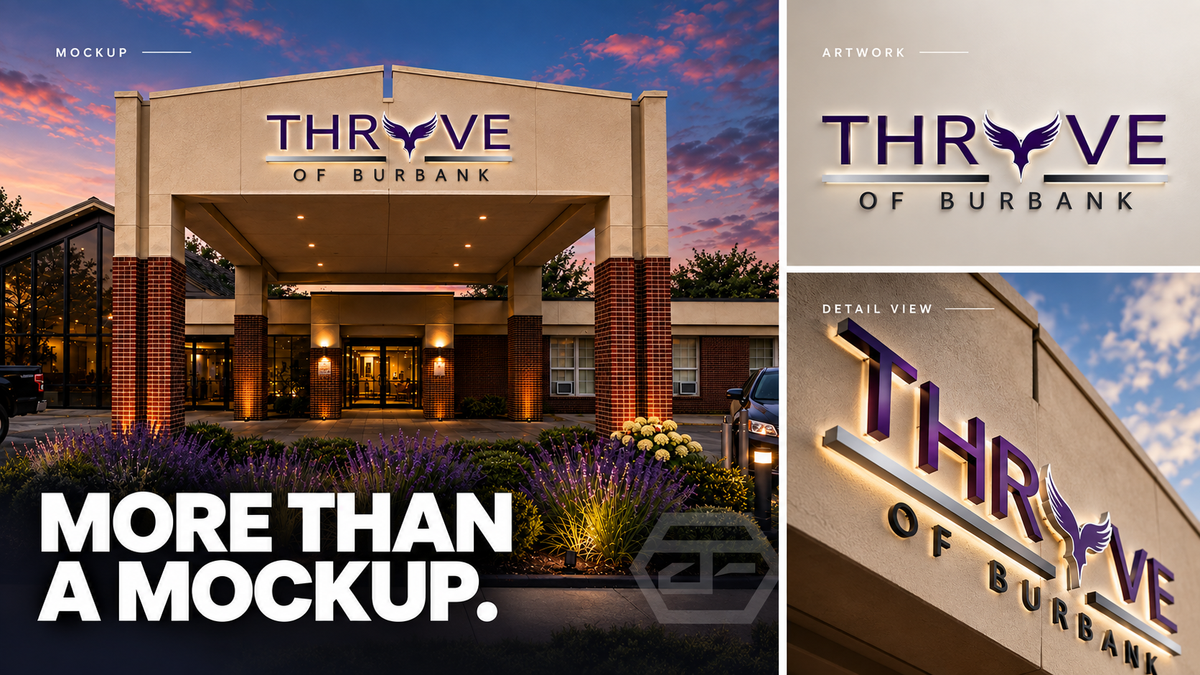
Designing a business sign often begins with a clear vision. Everything looks right on screen. But once the sign is installed, many businesses notice something unexpected, it doesn’t look the way they imagined. This difference is what we call the “Expectation Gap”. It happens because signage doesn’t exist on a screen. It exists in the real environment, where lighting, materials, scale, and context shape how it is perceived. What Creates the Expectation Gap? Most signage projects begin with digital mockups or flat drafts. These tools are useful for planning, but they rarely capture how signage behaves once it becomes a physical object installed in a real environment. In most projects, the gap between expectation and reality usually comes from four key factors: Color in context: Colors on screen can appear different once they interact with real surfaces, lighting, and finishes Scale and viewing distance: Signage often feels smaller or larger depending on the architectural space around it Depth and shadows: Dimensional signage introduces shadow and visual weight that flat designs cannot fully represent Material finishes: Metals, coatings, and fabrication details influence how the sign looks and performs over time Understanding these factors early in the design process helps businesses make better decisions before fabrication begins. 1. Color Changes in Context Lighting and surface texture can significantly change how colors appear in real space. Colors displayed on screens are created using light. Signage materials, however, rely on physical pigments, coatings, and finishes. When these materials interact with natural sunlight, artificial lighting, and surrounding surfaces, the result can look different from what appeared in the original design file. For example: Glossy finishes may reflect light and appear brighter during the day Matte finishes may absorb light and appear slightly darker Surrounding surfaces such as brick, wood, or concrete can influence how colors are perceived A brand color that looks vibrant on a white digital background may feel completely different once placed against a textured wall or exterior facade. 2. Scale Looks Different in Real Space Sign size must be considered in relation to the surrounding space, not just the design file Another common reason signs appear different after installation is scale. In design software, designers often zoom in closely while reviewing a logo or layout. What feels large and bold on screen may appear surprisingly small once installed on a large facade or interior wall. The human eye perceives size relative to its surroundings. A sign placed near a tall entrance door, a wide storefront, or a large reception wall must be designed differently than something viewed from only a few feet away. When determining signage size, designers typically consider: Viewing distance from the sidewalk or street Surrounding architectural elements The overall visual balance of the wall or facade Ignoring these contextual factors is one of the most common reasons signage feels “underwhelming” after installation. 3. Depth Adds More Than Dimension Dimensional signage creates shadows and visual weight that flat designs can’t fully capture Many custom signs are not flat graphics but three-dimensional objects. Dimensional lettering, raised mounting systems, and metal fabrication all introduce depth into the design. Depth can significantly improve how signage feels within a space. It adds shadow, contrast, and a sense of craftsmanship that flat graphics cannot achieve. However, depth also introduces visual effects that are difficult to judge in flat designs. For example: Raised letters create natural drop shadows behind the sign Directional lighting can highlight or obscure certain details Thin typography may appear less readable once shadows are introduced Without considering these factors during the design phase, the final installation may behave differently than expected. 4. Materials Influence the Final Perception Materials and finishes affect both the appearance and durability of signage over time Finally, the materials used in signage affect both appearance and long-term performance. Different metals, coatings, and fabrication methods interact with the environment in different ways. A design that looks perfect on screen must also function under real conditions such as sunlight, weather exposure, and daily wear. Professional signage design typically considers: Metal thickness and structural integrity Surface finishes and coatings Durability against weather conditions Mounting systems and installation methods When material decisions are made early in the process, the final result is much more predictable both visually and structurally. How Businesses Can Avoid the Expectation Gap Seeing your sign in context before production helps reduce the gap between expectation and reality Fortunately, most signage surprises can be avoided when the design process evaluates the sign within its real environment before production begins. In practice, this comes down to how early and how clearly a business can see the sign in context, not just as a design, but as part of a real space. Some practical steps include: 1. Review designs in architectural context Instead of approving a design on a blank background, the signage should be evaluated against the actual building surface or interior space where it will be installed. 2. Consider viewing distance early The sign should remain legible and visually balanced from where customers will actually experience it, whether that’s across a room or from the street. 3. Use realistic visualization, not just flat drafts This is where the biggest difference is made. Rather than relying only on static 2D designs, a realistic preview allows businesses to understand how scale, lighting, and materials will behave in the space. At AFCULTURES, this step is built directly into the design process. Using rapid visualization tools, we can generate a contextual preview of the signage within seconds, even during a live discussion, allowing clients to see how their brand will appear in the actual environment before production begins. 4. Discuss materials during the design phase Material choices should not be an afterthought. They influence both the visual outcome and how the signage performs over time. When these steps are incorporated into the process, especially when visualization is treated as a core part of decision-making, businesses are far more likely to achieve a final result that matches their original vision. How to Choose the Right Signage Company One of the most common questions businesses ask is: How do you choose the right signage company? In practice, the answer goes beyond design or price. A reliable signage partner should be able to: Help you visualize how your sign will look in the actual space before production Ensure accuracy with your brand guidelines, including color, proportion, and typography Consider how the sign interacts with lighting, materials, and architectural context Take ownership of both design and execution, not just fabrication Many signage providers focus primarily on production. However, without proper visualization and context, even a well-built sign may not deliver the intended brand impact. At AFCULTURES, we approach signage differently. Rather than treating it as a standalone product, we treat it as part of the overall brand environment, ensuring what is designed is as close as possible to what is experienced in reality. FAQs 1. Why do business signs look different after installation? Because signs are experienced in a real environment. Lighting, scale, materials, and surroundings all affect how they appear compared to a design file. 2. How can I preview my signage before it’s built? Use realistic visualization instead of flat mockups. At AFCULTURES, this can often be done in seconds, even during a live discussion. 3. What should I look for in a signage company? Choose a partner who can visualize your sign in context, follow brand guidelines accurately, and take ownership from design to installation. Conclusion The difference between a design file and a finished sign is common, but it’s also preventable when decisions are made with the real environment in mind. Because signage is not just a graphic on a wall. It is often the first physical representation of the brand. At AFCULTURES, we approach signage as part of that environment, helping businesses visualize, refine, and execute their brand presence with greater clarity from the start.
What Are Custom Signs and Why Your Business Needs One
Custom signs are powerful tools for brand visibility and customer engagement. This guide explores different types of signage—metal, neon flex, and 3D—along with their benefits, selection tips, and real-world case studies. Learn how investing in quality signage can boost recognition, attract traffic, and deliver long-term ROI.